Monday, February 27, 2006

Sears Quick Tool Change Replacement Muda


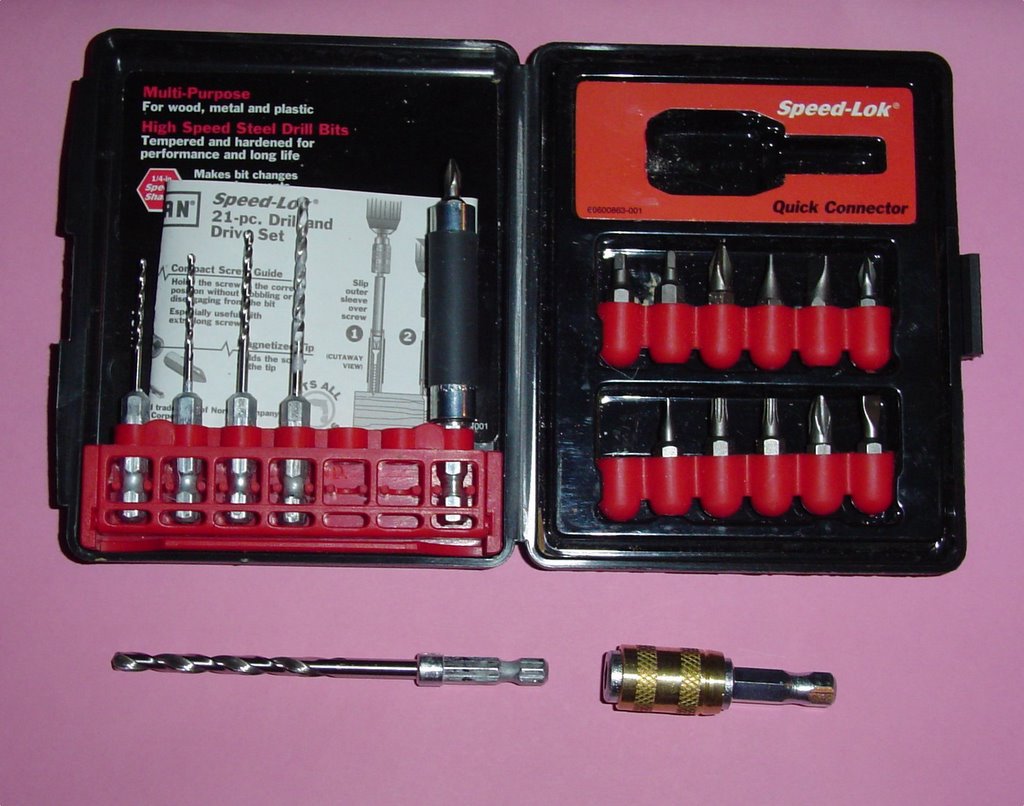
Sears has a cool quick tool change system in their Craftsman tool line called Speed Lok that has converted me from the old method of changing drill bits with a key. The Speed Lok system has a quick connection that allows for the quick change. It works great on projects where I need to drill a pilot hole first then easily change bits to screw in the boards.

From a lean manufacturing point of view, this is a nice quick change system. However, when it comes to getting a replacement bit, the Sears system has muda. All drill bits are considered perishable tooling with tool wear and breakage so there will come a time to replace a bit. This past weekend, in the middle of a project, my 5/32" bit broke.

I thought it would not be a problem to just replace it. It didn't turn out as easy as I originally thought. Apparently, my local Sears store does not carry individual bits of the Speed Lok system yet carried a wide selection of the old key method bits which could be bought individually. My only choice, if I wanted to stay with the Speed Lok, was to buy another set. The smallest set was 21 pieces. Why force a customer to buy 21 pieces when they only need 1 piece? MUDA!

Maybe a different Sears store carries individual bits but that would take me out of my way. Good thing the 21 piece set was on sale, I saved 50% of the cost. If I could have bought just the individual bit, I'm sure I could have saved even more.

Wednesday, February 22, 2006

The Sound of Manufacturing

In my recent post on the Top 5 Rules of Effective Measurement Boards, Rule #5 is to meet daily at the boards. And the best method is to go to gemba and meet directly on the shop floor in a manufacturing environment. As Rick Maher points out in his comment, they love their boards for their daily meeting however "we are unable/unwilling to hold our daily meeting at the boards because the noise of the plant is too loud and distracting". Their solution is to move the boards which are on casters to a conference room for their daily meeting. Any ideas?

The public image of manufacturing as a place of smoke stacked buildings that are dark, dreary, dirty, oily, smelly, and noisy is certainly a throwback to the old days. That is not say that all manufacturing plants are a Garden of Eden, but many improvements to the manufacturing environment have taken place over the years.

In a lean journey, a strong 5-S program helps dramatically improve the working environment of a manufacturing plant. In the past, dirt and poor light were an accepted condition because that is just the way it is in a manufacturing setting. With 5-S, we changed that way of thinking. Dirt, clutter and darkness are not allowed anymore. But what about noise?

Noise is probably the last area to conquer in manufacturing. Rick's plant is probably just like many of our plants. With all the bells blaring , towmotors revving , horns honking, metal slamming, intercom chattering, air compressors churning , air hoses hissing, motors running, skids dropping not to mention people yelling, music blaring, saws buzzing, belts turning, conveyors squeaking, hammers banging, welders buzzing, presses pounding, tools humming and fans turning. The problem is that we are conditioned to accept this noise level as just the way of manufacturing life.

Without knowing any details of Rick's plant, I will try to offer a few improvement ideas. First, decide that noise levels can be improved just like dirt and low lighting. Start by asking the 5 Whys to get at the root cause of noise. For example: towmotors make lots of noise, why? They have loud mufflers? Why? The mufflers have holes in them? Why? they have not been replaced? Why? Maintenance has not replaced them? Why? Not listed on a PM Program.
Now we can replace the mufflers and add them to the PM program.

If you pushed the lean principles, I would ask the questions from a different point of view. Why do we need towmotors in the first place? We move bulk stock around the plant. If we organized into cells with one piece flow, towmotors can be eliminated (or drastically reduced). One noise source eliminated. So try to eliminate it before reducing it.

The overall noise issue would be an excellent Kaizen event. Form a team to root out all the noise sources and eliminate or reduce them. A sound meter can be easily purchased for low cost to measure the before and after noise levels. Set a goal for an 80% reduction in one week.

Be creative in your approach with isolating noisy equipment with sound dampening panels and eliminating metal to metal contacts (use padding, carpet, foam, plastic, etc.). Use two-way communication systems instead of a plant wide intercom. Block the air compressor noise by isolating it or adding dampening panels. As you replace tools, make lower sound levels a desirable criteria in the selection process. Have a plant wide effort for noise reduction by fixing leaks, replacing hoses, and oiling squeaks. Are all the buzzers and bells still useful? Get rid of unneeded signals. Don't get in the habit of turning on all the equipment at the beginning of the shift when some equipment is not needed. Turn off these machines when not used regularly.

I hope these suggestions help in your lean journey and reduce the noise levels. If anybody has other suggestions or experiences with noise reduction efforts in their plants, please help us by adding them to our comments. Thank you Rick for presenting an outstanding challenge!
Monday, February 20, 2006

Waste can Sometimes be Put to Good Use


I promote the elimination of waste as one of the driving forces of lean manufacturing and I am not deviating from that objective. However, I saw a cool example of turning waste into a second, useful life.

This past week, I ordered an Imada force gauge and test stand from MSC Industrial Supply. My buying experience was outstanding. MSC arranged for a non-catalogue item (the specific test stand I wanted) directly shipped from Imada within two days. Instead of saying "Sorry, we don't carry it", they told me "Let me see what we can get from the manufacturer!". All over the phone it two minutes. Great Job MSC!

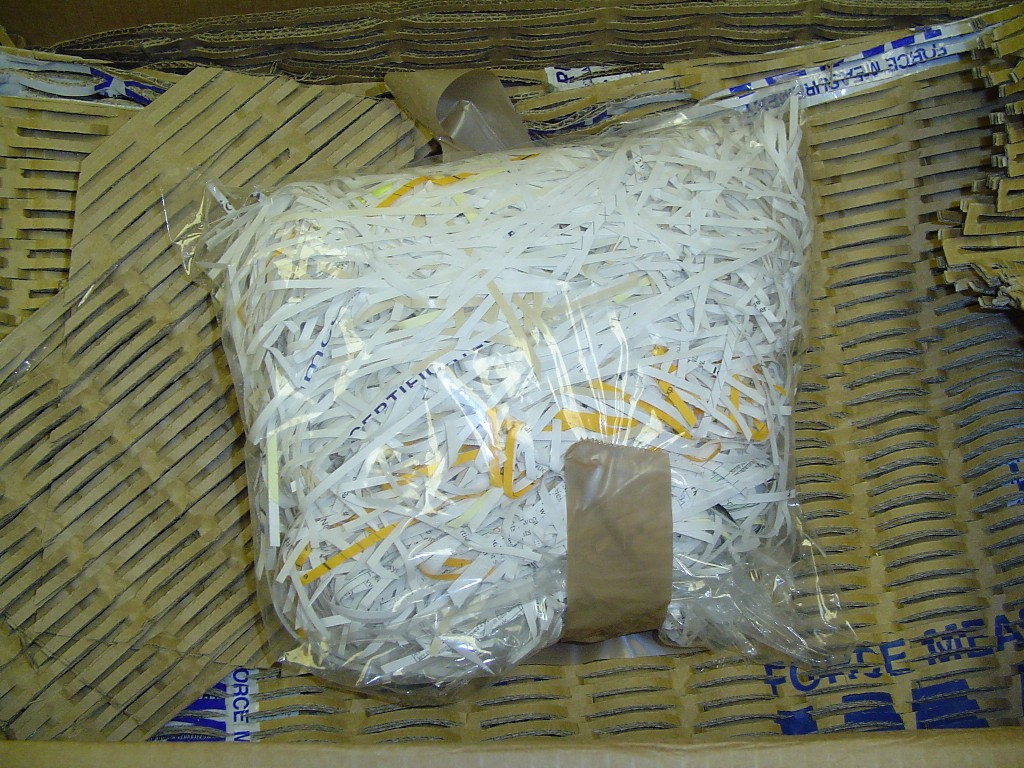
When the package arrived at the my dock door, I quickly got the packing slip passed on to purchasing and opened the box. The cool idea I saw inside was waste put to good use. A bundle of shredded office paper in a plastic bag was used as protective padding. What an excellent use of typical paper waste. Great idea Imada!

Friday, February 17, 2006

Point the Way on Charts on Graphs


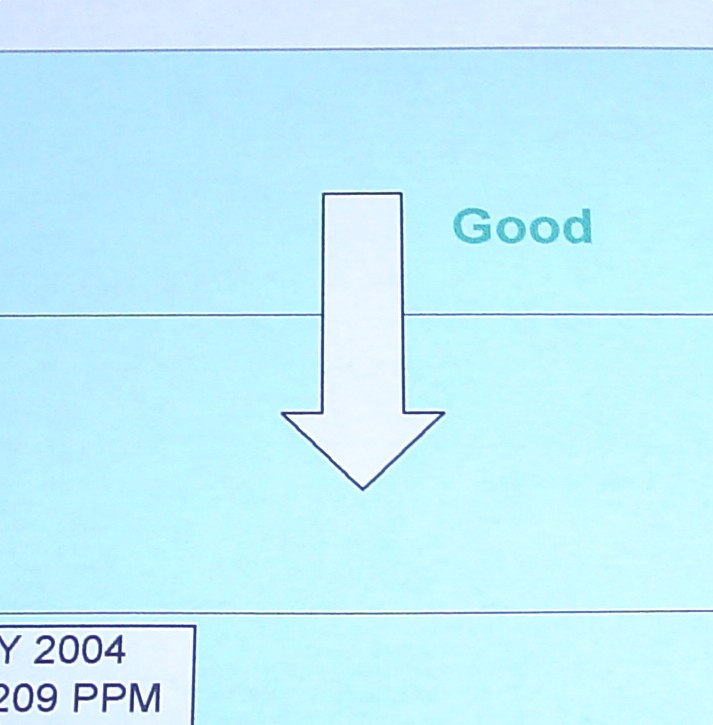
Here is a good idea I recommend for your charts and graphs on measurement boards - adding an arrow. This arrow will indicate the good direction of the chart. For example, a quality PPM goal will be positive if decreasing so the arrow will point down.

Many people may not understand how to read your charts at a quick glance. Some charts going up is good and other charts going down is the positive direction. It may be confusing which one is which on your chart. So make it easier for them! Add this little visual indicator and everyone will quickly see which direction is the positive one.

Wednesday, February 15, 2006

Top 5 Rules of Effective Measurement Boards


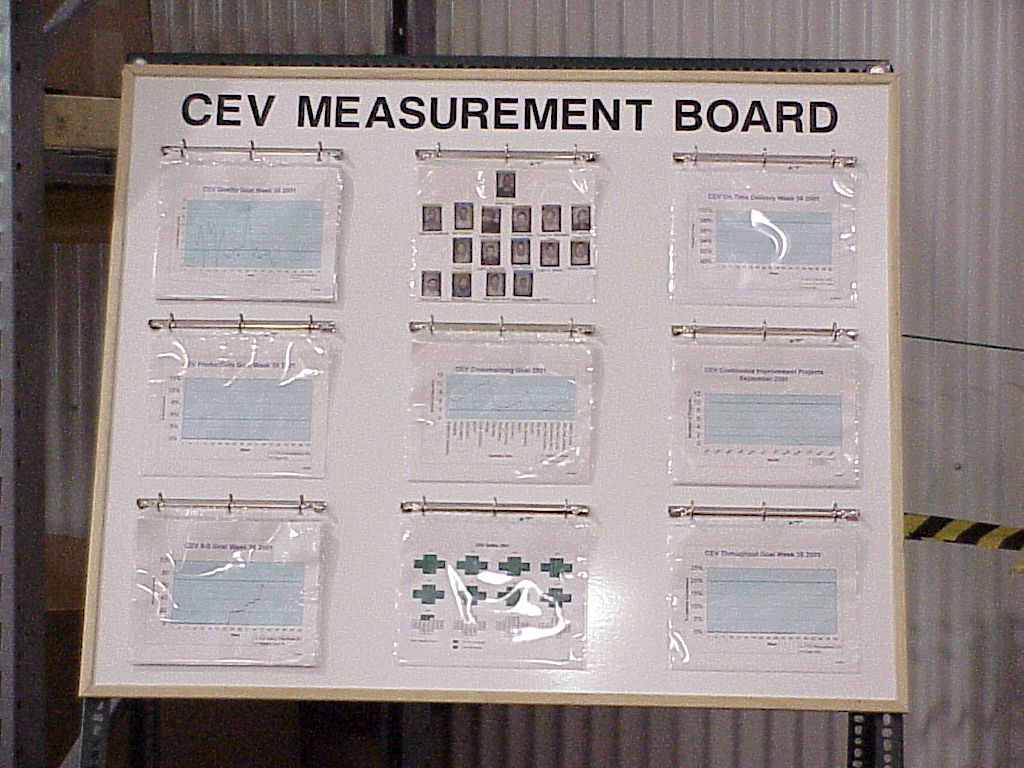
Keep everyone informed by using a department measurement board or dashboard listing the top metrics during your lean improvement journey. For measurement boards to be of any value, here are a few must do rules.

Rule #1 Board Information Must Always Be Current

To be effective, the board must be updated regularly with the latest information. Once the information becomes stale like an old bread loaf on the kitchen counter, it will be useless as an improvement tool.

Rule #2 Boards Display Only Most Important Metrics

When choosing metrics for a company, plant or department, the list grows fast to cover all the possible measures that management deems important to control a business. That's the wrong approach from the old way of "thinking". Remember, you are now "Lean Thinking". That means metrics should be specific to the goals of a lean thinking organization. Measure safety, Measure time (order to customer delivery to payment), Measure quality from the customer point of view (complaints and defect in Parts Per Million), Measure number of improvements, Measure the bottom line.

Rule #3 Promote the Team

The results of each metric is due to the diligence, creativity and basic roll-up-your-sleeves hard work by each team member of the area. Give them the credit for what the metrics display. Put their names and pictures out front for all to see.

Rule #4 Boards Show Future Action

It is important to show the metrics and achievements of the department on the board. Track progress, be proud of the accomplishments and recognize the team. But in reality, it looking at life through the rear view mirror. The measurement boards are also boards of action. List countermeasures, improvement action plans, people responsible and implementation dates. Emphasis should be towards the future on what we are planning to do in addition to the history lesson of what we have already accomplished.

Rule #5 Meet Daily at the Boards

As mentioned many times before, lean manufacturing principles strongly promotes going to gemba. Instead of a typical daily manufacturing staff meeting or production meeting held in the conference room, go around to each of the department board for the updates. Have the leader or even an individual team member update the group from the board. It will certainly promote the importance of the metrics for all to see and give others the chance to see improvements at gemba. Improvements can be seen in 3-D on the shop floor better than any paper report.

Monday, February 13, 2006

Needs a Good Home


A place for everything and everything in its place is the motto of 5-S. The muda of searching for items and the added frustration after a lengthy hunt can be eliminated by following this principle. To follow this deceptively simple principle can be a challenge.

All it takes is organization (establishing a home), communication (letting everyone know where is home) and discipline ( putting it back after use). The hardest of the three is usually the discipline portion of the equation. We tend to let our bad behaviors and old habits get in the way of change. We can also rationalize that we will put it back later because something important just came up. With training, persistence, and following up, we can overcome these old habits. If you show that this is important, it will become important to others.

Thursday, February 09, 2006

Biggest Barrier in American Business Getting Lean

One of the most basic fundamentals in the lean approach to business is the single biggest barrier preventing the majority of business "getting it". It can be simply put just like the title of Jim Womack and Daniel Jones' book, it's all about "Lean Thinking".

As Dr. Shigeo Shingo stated, "much more than a matter of technique; it is an entirely new way of thinking about production itself". That's our problem. We don't think lean, we just use the tools..sometimes.

Wednesday, February 08, 2006

Gas Tank Poka-Yoke


Have you ever been driving a rental car (or a car that you normally don't drive) when you pull into the gas station to fill up only to realize that you don't know which side of the car is the gas tank? In the past, you had a 50/50 chance of getting it right when you pulled up to the pump. After getting out of the car to check, you may have to pull back in on the other side...Definitely muda.

Here is a great example of a simple poka-yoke device that solves this problem. Look on the dashboard at the gas gauge. Most newer cars have added a simple arrow indicating the correct side of the vehicle to fill up the gas tank. Cool poka-yoke device, almost as good as the low gas indicator!

Tuesday, February 07, 2006

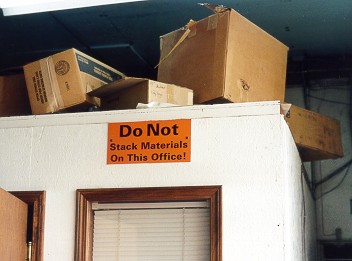
Signs don't always Work


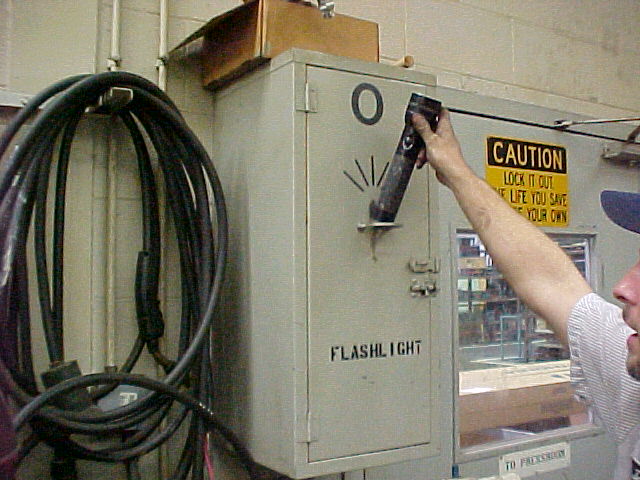
Signs have been a common method to communicate information since the beginning of the written word. Unfortunately, we don't always follow the instructions as seen in this actual plant photo. I wonder why this particular sign did not cause people to follow it's directive? Many times we think by just putting a sign up will solve or prevent a problem. Think again!

Should we track down the offenders and make public examples of their civil disobedience. Verbal warning, written warning, double secret probation or just fire them? Some management would think along these lines.

Wouldn't it be a better approach to poka-yoke (mistake proof) the situation. Putting this lean principle into action, maybe a sloped roof would prevent this problem. Are there places within your work environment where signs are ignored too? Take a moment to see if a better approach can be put into action.

Monday, January 30, 2006

Can you Read the Handwriting on the Wall?

Regardless of what productivity improvement method you subscribe, the area of communication always shows up on the list as a much needed area of improvement. As humans, we have struggled with this problem since the beginning of time without significant results (with the exception of speed and distance). From the earliest cave drawings to hieroglyphics to the written word, people have expressed their ideas, thoughts and instructions to others yet many times there is a breakdown in conveying the message. Knowing this, why not take every opportunity to prevent the muda of poor communication or miscommunication?

From a lean manufacturing point of view, the muda associated with poor communication causes, at minimum, a stumbling block in the value stream all the way up to a major disaster that could jeopardize the survival of the company. Sometimes the mistakes in communication create a humorous event with little harm to the organization (the best kind of communication error if there is one).

One of the earliest and most common methods of communication is writing. Of course, the earliest form was the handwriting on the wall (of the cave). Even today, the skill in reading the handwriting on the wall helps in the business world. But that depends a lot on the quality of penmanship. Unfortunately, many of us have poor penmanship. Our 7 could look like a 1 or 9. Our 6 could be mistaken for a zero. Words like kick, lick, nice and kiss get confused and cause problems...Just ask Guy Kawasaki.

Quite a few years ago, before the PC could be found on every desktop, our computer system at Hill-Rom (one of my previous employers) was housed in the large, central computer room. In order to add, delete or modify any computer records, engineers had to submit a transmittal. A transmittal was a simple formatted sheet of paper with designated spaces to hand write the information of the record that was given to computer programmers for entry. I was adding some work centers to our MRP system for the fabrication department and one of these work centers was for a 105 ton punch press. Keeping with our naming convention, I wrote 105T Press on the transmittal sheet. After waiting on the batch process (3 days back then) to clear, I received confirmation of my new work center. The only problem, my 105T Press was added as the Lost Press. That error did not cause a lot of harm but certainly was the source of many wisecracks. Every time I walked through the fab department, somebody would shout out, "Hey, Mike. Did you ever find that press we were missing?"

By avoiding handwritten communication and using computers, label makers or printed out forms of communication wherever possible, you can improve you chances of getting your message across. Look around your office and factories at all the handwritten information posted. Can you read the handwriting on the wall?

Wednesday, January 25, 2006

Good Luck To Ford

With great interest, I have followed the latest drama of the Big Three ( now known as the Shrinking Three) . The turnaround plans recently announced with great fanfare by Mr. Bill Ford were not surprising-cut jobs, close plants and squeeze suppliers. Sure there were faint glimpses of hopeful vision thrown in the plan about doing business with a focus on innovation and changing the business as usual culture.

My initial reaction to the plan was neutral. That's the problem, no excitement and no rally cry to gather around. Based on their plan, my belief is that Ford will not regain the market share its lost over the years of molasses management however Ford will survive. (Smaller but still kicking). Basically, I have little faith that Ford's culture can really change. As a Pro-American Manufacturing professional(and Ford owner), I hope that I am wrong and I wish Ford the best of luck!

If Ford is seriously wanting to challenge "Business as Usual" and reverse their downward spiral, here are a few suggestions. (Same goes for GM, since I'm also a Buick owner).

1. Upper Management is to accept responsibility for the current condition of their company. Look inward at their decisions and policies instead of blaming everybody and everything else. The first reorganization should be in the top tiers, not at the hourly level.

2. Forget about the practice of hiring management with "automotive experience only" requirements. Ford needs to hire based on talent. Get the best talent available from anywhere you can find it.

3. Forget about cutting costs. Instead focus on eliminating waste and adding value from the customers point of view. Profits will follow. If Ford management does not understand the difference or what this means, there is no hope for a true culture change.

4. Put manufacturing people in charge. Its all about the cars and trucks. Listening to finance and accounting may help in number crunching but the passion is in the product.

5. Be humble and seek knowledge from examples of Toyota and Honda. Learn the ways to improve and make it fit within the "new" culture of Ford.

6. Kill the current overpriced ad campaigns-they do not work. Slash the ad budget by 90% and cut all the different ads for all the different models. Replace the ads with ONE powerful, central theme of a simple message. The spot would feature Mr. Bill Ford talking to America by simply saying Ford is changing for you (the American Car buyers) featuring improved style, performance and safety. Let us prove it to you and you be the judge. Short, simple and run only a fraction of the times. The print ads should be the exact same message. One message, one ad concept to sell Ford not each model.

7. The main problem is not over capacity, it is overhead. Keep the factories and adjust the overhead cost to match volume.

Finally, to improve you must go to gemba! I wonder if Mr. Ford has personally visited any of the 14 proposed plants set for closure/idle or the decisions were based on reports/presentation data? Shame on any senior management that fails to regularly visit their own manufacturing plants especially if they are contemplating closing one down.You can not improve or make solid decisions from afar, roll up your sleeve and go to gemba to gain awareness and true understanding.

Monday, January 23, 2006

Spend More Time at Gemba

When I was visiting a customer site recently, a passing comment by my customer hit a nerve. He told me that this was the first time anyone from my company spent more that one or two hours at his distribution center. My visit (my first to this customer) was for two straight days trying the learn all I could on how our products were received and the quality level of our products. In addition, I listened to everything my customer had to say about our products and service to improve.

His comment hit a nerve in that we sometimes take our customers for granted and sometimes not take the time to "see" the issues from our customer point of view. It also got me thinking about "Going to Gemba" principle of lean manufacturing.

I bet that all the previous visitors thought just a quick visit to see "how things were going" was enough time to spend at gemba. So how much time should one spend at gemba? Is one or two hours enough?

According to the stories I was told about gemba training, Taiichi Ohno was famous for taking engineers or supervisors to the plant floor and making them stand in a circle on the floor to observe the process. After a while (usually several hours), Taiichi Ohno would ask them questions about the process. If the answers proved unsatisfactory, it was back to the circle. Sometimes this observation period would last a full 8 hours shift.

The point is to stay at gemba until you understand the process clearly or gain awareness. In my case, two days were enough time to understand my customers process. It will take more time in gemba to truly gain awareness.

Thursday, January 19, 2006

Quest for the Dawn

For the past couple of months I have been on the road more than usual. Although it keeps me away from my family, it does have a side benefit of allowing for some quality reading time at night. There are a stack of books held in reserve for just this purpose.

A book that I recently finished is "Quest for the Dawn" by Shoji Kimoto. "Quest for the Dawn" is a fascinating true story set from about 1930 to the mid 1950s of a bold business quest to build an automobile from the ground up. The relentless inventors were Sakichi and Kiichiro Toyoda and, of course, the car manufacturer was the Toyota Motor Company.

Based on translations from their personal diaries, this story provides a powerful insight on the determination, vision and passion of the founders that built Toyota. It also gives a glimpse of the Just-in-Time philosophy that started from day one at Toyota and formed the groundwork of the modern Toyota Production System.

If you have the opportunity, pick up a copy of Quest for the Dawn. It is definitely worth the time to read. It is truly amazing that Toyota made it through their constant struggle to survive during those early years. In contrast to a large number of American companies with greed, short-term driven results and weak strategic direction, Toyota's culture is most honorable. The overwhelming factor in Toyota's success was passion, the key ingredient that is missing in many companies today.

Thursday, January 12, 2006

Reducing Process Variation, Just Be Consistent

The Six Sigma Approach to process improvement is holding steady across manufacturing and spreading into other areas like health care and the governmental sectors with some limited success. Unfortunately, many leaders are still in the dark about Six Sigma. (I can not tell you how many people still think my Black Belt is martial arts related).

The best way I found to get others to start to understand the Six Sigma Approach is to lay out the simple goal of reducing process variation or just be consistent.

Since not all processes are perfect, variation occurs. By tracking results or outcomes of a process, we can measure the limits of this variation. This will show us the behavior of the process. Based on the process behavior, we establish expectations from our process and we can predict future results. Then we can match the process results with customer expectations (process specifications). If they do not match or stay consistent, we have a big problem.

A good example is McDonalds' french fries. McDonalds does a pretty good job of controlling their french fry process so no matter what McDonalds you go to, the customer knows what to expect when they order french fries. The same can be said for most of their other food offerings. McDonalds is not perfect but they definitely understand the importance of the consistent quality of their product.

On the other end, Holiday Inn could take some simple lessons from McDonalds. This past week, for example, I was in Kansas City at a customer site with accommodations at Holiday Inn. Besides the check in and check out processes, very little service contacts are present to make a good impression on your hotel stay. One very simple process is having a USA Today placed outside your door each morning. During my stay, the paper was placed at my door only 2 out of 3 days. If I wanted a copy of the paper on the off morning, I had to go to the front desk.

Why is the simple process of having the paper at my door not consistent every morning? This inconsistent newspaper process happens no matter which Holiday Inn I might stay at (To be fair to Holiday Inn, other hotels have similar inconsistency with the newspaper delivery). You would think this morning newspaper delivery process would be easy to control. As a customer, I do not expect to see the paper every morning, it is a hit or miss process.

Based on the two examples, which process is more consistent? How does this consistency translate to satisfying the customer expectations? Using a Six Sigma approach helps you just be consistent to improve customer satisfaction.

Wednesday, January 04, 2006

Take Before Pictures


In the excitement to quickly make improvements as soon as we hit the shop floor, slow down enough to take some "Before" pictures. Before pictures have a powerful impact to any lean improvement process yet many of us forget to take the time for some quick pictures before we start the improvement quest.

With the power of digital photography today, this step is easier than ever before. Just like in the home improvement magazines or even those popular make over shows ( personal appearance, rooms or total house redos), the power of seeing the before shot next to the after shot helps visually demonstrate the accomplishments. Sure, you can show numbers and graphs with plenty of data measuring the improvements of the lean efforts but pictures really tell the story.

Posting the before and after pictures on the shop floor promotes pride and a sense of accomplishment by the team. The same pictures are used to report to upper management the lean improvements made in the organization. Another great benefit is sharing these pictures with other departments or plants to spark their imaginations to make similar improvements. All it takes is a little time devoted to making "Before" pictures.

Lean Manufacturing ASAP Rules

As Soon As Possible

As Small As Possible

As Simple As Possible

As Safe As Possible

Tuesday, January 03, 2006

Use the Right Workbench for the Job

The most common and most overlooked element found at almost every workstation in your plant is the workbench. As you kaizen your work areas, take a close look at the workbenches. Most are standard catalogue items ranging from 30 x 60 inches to 36 x 72 inches. It seems that most workbench manufacturers have the classic one size fits all offering. High end workbench manufacturers promote the latest designs from their ergonomic advantages to multi-functional capabilities. But they all fail to promote lean by providing the smallest footprint possible.

Now take a closer look at the tasks performed at the workstation. In examining the tasks, check if the task requirements match the workbench size. In almost all cases, the current workbench size is incorrect. The task requirements should always dictate the space required for a workbench, not the other way around.

In determining the correct workbench size following basic lean manufacturing principles, attempt to provide the minimum amount of bench surface with the minimum amount of stock. Use common sense and experimentation to determine the appropriate stock level that works in your specific task. Also experiment with different size workbenches by building prototypes out of two by fours and plywood first. The employees at each station can provide valuable input about improvements and specific requirements of the workbench for each task area. Remember they are the local experts!

Once the acceptable workbench size is determined, be prepared to custom build it to those specifications. Use a low cost custom workbench approach that can be built in-house. PVC tubes, garage racks, and home improvement items can be useful in the design. Other design considerations may include adding casters for mobility in rapid layout changes and eliminating drawer/excessive shelves to remove clutter.

After the custom sized workbench is successfully placed in production, I have found that at least a 50% floor space reduction can be obtained over conventional, standard workbenches.

Wednesday, December 28, 2005

Kaizen for the Holiday Season


As I enjoyed the warmth of holiday time with my family, several ideas came to mind that could help improve the holiday season from the customer point of view. Although these ideas do not reflect upon the true meaning of the celebration of Christmas, they do provide a kaizen approach to the more commercial side of the holidays. I readily admit that these areas of improvement are purely self-centered in nature and, compared to world peace, are not all together important yet would go a long way to make our holidays just a little bit better. With that said, let me share my number one area of holiday improvement.

Improvement Ideas Number 1: Make all toys easy to open by kids.
Listen up Toy Manufacturers! Please get rid of those pain in the bottom twisted wires that hold many toys in their packages.

My nine year old daughter and soon-to-be five year old son are fiercely independent kids who want to open up their presents without adult assistance. Despite all the potential reasons by the toy manufactures for including these barriers to the true end customer (kids) to quickly get at their toy, the dreaded wires are hated by all.

I am not a toy manufacturing expert so the reasons of security, presentation and protection of these bound up toys may have some merit. But from my lean manufacturing experience and more importantly, my consumer experience, I believe that there must be a better way.

The manufacturing process to apply those twisted ties must be a labor intensive process not to mention extra material cost. Despite the fact that overall labor costs are low with a majority of these toys manufactured in China, the margins are tight in the competitive toy market. In addition, retail pressures from the big box retailers like Walmart, a big player in retail toy sales, will continue to squeeze out every penny in cost. Bottom line, there is an opportunity here to make customers happy and save costs.

While manufactures are looking at kid friendly packaging, lets look at replacing thick wires ties, not sewing Barbie's hair to the cardboard backing, pre-applying the tons of stickers that require adult application, and getting rid of the hard to remove security tapes on DVD cases. Each of these packaging methods are barriers for kids to getting straight to the action of playing with their new toys.

Christmas Holiday Wish

Christmas is a glorious season of renewed hope and joy for all mankind. May this spirit of peace and goodwill continue to burn bright within each of us throughout the New Year.

Wednesday, December 21, 2005

Keep Footprints Square


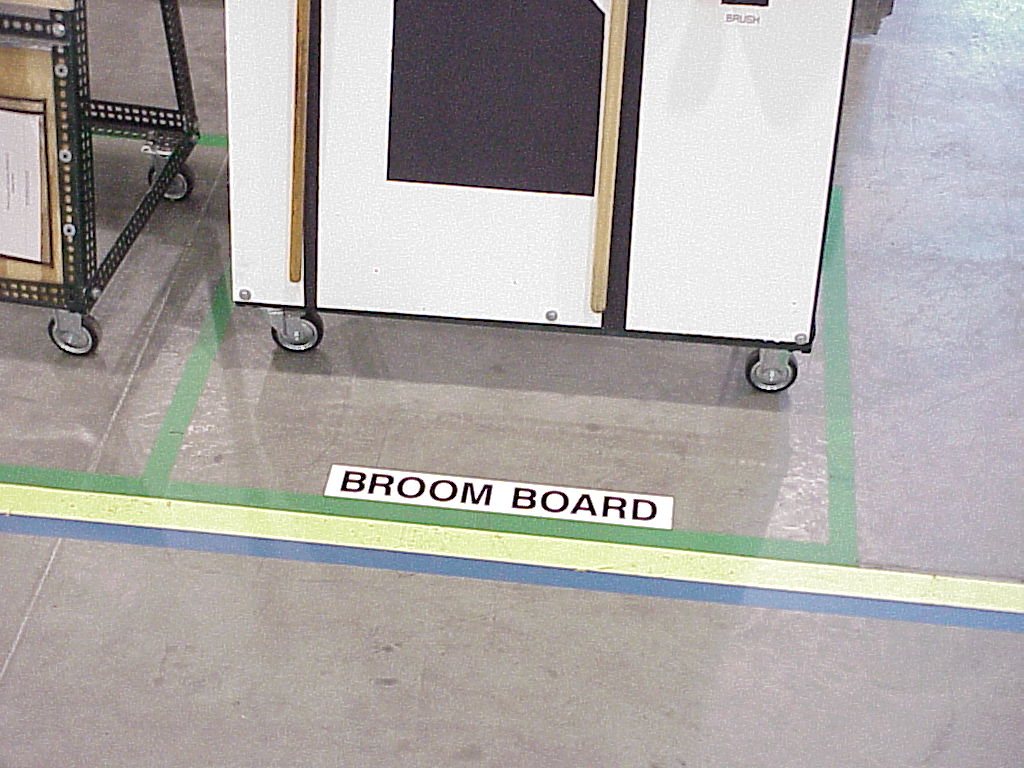
Placing footprints on the floor outlines the home of an item. This item could be equipment, tools, benches, boards, etc. Using simple floor tape and adding a name label makes it easy to identify the item belonging in the footprint.

A common mistake is to make a detailed outline the conforms to the item shape where the footprint ends up looking like a jigsaw puzzle piece. Don't spend excessive time and energy with this approach. A simple square or rectangle works best.