Tuesday, June 27, 2006
Welcome Honda to Greensburg, Indiana!
I learned earlier today that Honda Motor Company has set a press conference for 10:30 am tomorrow in my hometown of Greensburg, Indiana to officially announce that Greensburg will be the new site for their latest North American car plant. It has been estimated that 1,500 jobs will be added to my community to build 200,000 cars annually by 2008. The investment of $400 million to open this plant will be a great shot in the arm locally. Honda is a world class operation with a strong lean manufacturing background that may help improve our quest to improve manufacturing in Indiana. Welcome Honda to Greensburg, Indiana!

Saturday, June 24, 2006
Big Band-Aid

I read an interesting article recently on the Study of Emergency Room (ER) Wait Times in the United States. Apparently, my home state of Indiana ranked 16th out of 49 states in the study so we are a little better than average. According to the article, the national average wait time is 3 hours, 42 minutes. Iowa was the nation's best with an average wait time of 2 hours 18 minutes while those seeking emergency help in Arizona waited a painful 4 hours and 57 minutes on average. This is just the average in each state, not the range from high to low. Makes me wonder what the variation was in the wait time. This measurement is not comforting especially if you are one of the unlucky patients on the upper end of the bell curve! Yet, there is more to this story.
The focus of the article centered on the need for hospitals to start seeing patients as customers and the patient satisfaction level linked to long waits. First of all, I have the highest level of respect for all the doctors, nurses and the entire ER staff for their skill and dedication in saving lives. I always assumed as a patient that we were already thought of as a customer by the ER staff. Well, at least the very few times in my life I experienced the services at an ER, the staff displayed extreme compassion and outstanding responsiveness to the medical emergency surrounding my family. I guess from the medical side of the equation that may be a false assumption across our nation.
I do not consider the ER environment your typical model of a service provider and customer. Can you imagine a patient (customer) shopping around for an ER while needing emergency medical attention? Or a patient (customer) leaves an ER due to the long wait as if we were at a restaurant waiting for a table? The biggest factor in my opinion is that in typical service models, it is a first come, first serve system and the ER service model is based on severity of the medical emergency determining the priority. As a result, some people who use the emergency room may have to wait longer if their "emergency" is not life threatening to allow other patients with urgent medical needs to be treated first. Yes, some patients will cut in line ahead of others to save a life increasing the wait time for some of us. I would not want it any other way!
However, from my lean manufacturing point of view, I see the need for improvement in our healthcare system including the ER setting. The lean healthcare focus is beginning to spread across our nation to address some of the wastes without compromising the health and welfare of patients. Since time is one of the major factors that may help save lives, the velocity of the value stream to treat a patient should be constantly improved. With healthcare cost soaring, the entire healthcare system merits observation, study and analysis to determine improvement opportunities.
One point in the article that really jumped out at me was the "solution" to the long ER wait suggested by one consulting firm. They suggest that by regularly communicating with the patient their status in queue while they waited, the patient level satisfaction level will be higher compared to patients left in the dark waiting for medical treatment. Although the data may support some increased level of satisfaction, this recommendation is just a big band-aid. It accepts that status quo of long waits instead of seeking out the root causes and setting in place the proper counter measures.
But upon reflection, I see that we have this same mindset in manufacturing. How many of us guilty of looking for "trick" ways to improve the measurement and ignore addressing the root cause of the problem? How many of us have added secondary operations like reaming, repairing, trimming, wiping, cleaning, touch-up, grinding, etc, to compensate for a problem to keep our lines running and never address the root cause of the problem? When our manufacturing emergency hits, we put in the band-aid fix at break-neck speed to get our lines back up and running or make the parts pass. We are manufacturing heroes! Hurray!
We all agree that this band-aid fix is just temporary until we get a chance to fix the real problem. How long do we define temporary? Is it one shift? Is it just until the next day. Is it next week? Is it just until our plant shutdown? Maybe never?
Do we as manufacturers manage our resources like in the ER where the severity of the problem determines the priority of our response? Sure we do. However, unlike the ER where every medical case is addressed, many problems in manufacturing are never fixed. Our band-aid becomes the permanent fix and we accept the waste created as just the cost of doing business. How many band-aids exist in your manufacturing process today?
Friday, June 09, 2006
Shadow Board?

I came across this example of a prototype shadow board at a Kaizen Report out I was invited to recently. This shadow board is extremely well done, professionally crafted and looks down right impressive. All items are veay easy to identify on the board. All that is needed are some hooks/holders for the items and then it will be ready to hang up. You may think this shadow board was an expensive endeavor or overkill however it was designed and manufacturing internally at little actual cost. So what is the problem from a lean manufacturing point of view?
It's too good! The photos were so well done that at first glance you would think that all items are present and accounted for. The principle of a shadow board to show a shadow of an item for quick and easy identification of a missing item. That is why a black spot outlined in the profile of the item along with a written label works best.
Thursday, June 01, 2006
White Board Muda
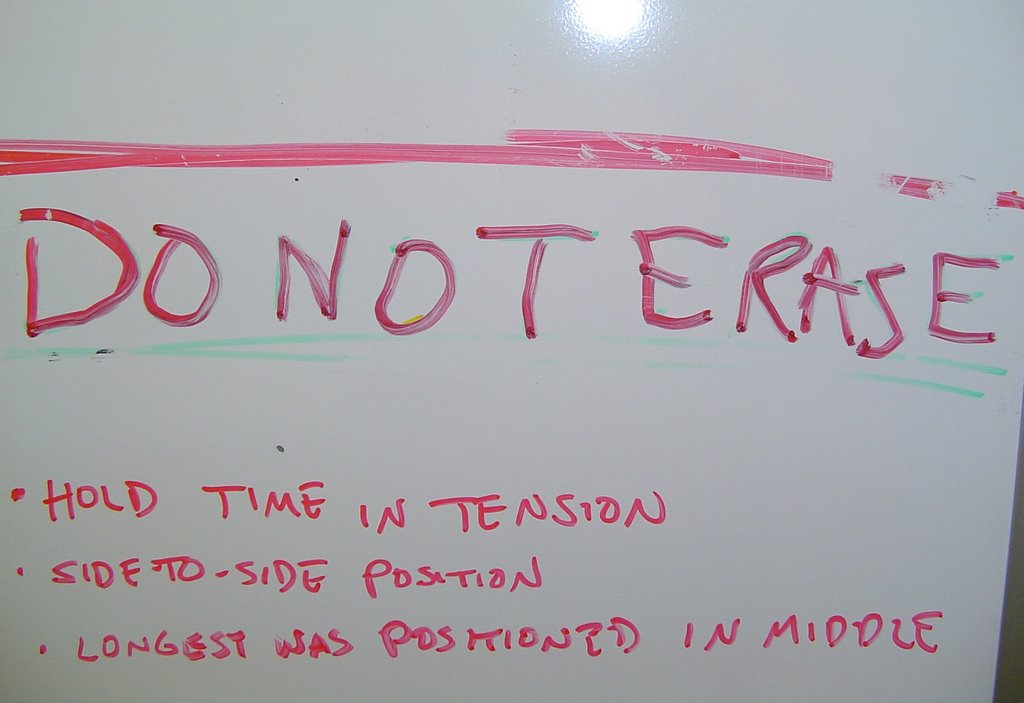
While conducting six sigma training last week, I noticed that both large white boards in the training room were filled with value stream maps and other information developed by improvement teams. Pretty cool to see evidence of lean improvements in progress. However, I also noticed white board muda.
On each white board, written notes of "Do not Erase" and "Save" were strategically placed to prevent anyone from removing the previous work on the board. It seems like a good idea to save the work and poka-yoke (mistake proof) the information to prevent being accidentally erased. But during my training course, or any other future training in this room, the white boards could not be used while this information was saved. Despite the request to "Save", it's no guarantee that the information will not be erased.
Next to the "Do not Erase" was no additional information like who wants it saved or for how long. It could be weeks or months that the white boards remain frozen in time holding this information and preventing its use during this time.
As a lean tip: Do not practice the habit of writing "Do not erase" on important information conceived on the white board. It could be erased anyway and the white boards can not be put back into action for others. Quickly transfer this information to save it and wipe the white boards clean.
Friday, May 26, 2006
It's Back to the Real World
Remember back to any of your training sessions or seminars, at least the good ones that sparked your imagination or helped you see the light with a mental clarity never before experienced. You know that feeling of absolute, crystal clear, laser beam focus, sense of higher purpose type motivation that you felt. Do you recall those feelings as you left the session armed with your new insights and skills ready to put them in action? Then what happened? In many cases, that wonderful, burning passion is doused with the icy, cold water of reality. The reality back at your plant, your office, your company. It's back to the real world!
What is waiting for you is simple chaos. Your email inbox is filled with tons of new messages, most of which are not all that important and many requiring some sort of response upon your immediate return. Depending on the email culture within your company, it may take you the better part of the morning, if not all day to clean up the email aftermath of a prolonged absence. Not to mention, notes posted on your door to add to your "To Do List Upon Return". Then you have the line of people waiting days to talk with you about some problem, decision or assignment.
Speaking of assignments, a few of your project tasks got moved up and these tasks needed to be completed yesterday. Didn't you get the email? In addition, the priorities have changed on a couple of projects, all moving up naturally. Oh, we also have a new vision from corporate that needs to be incorporated into our overall strategic planning because we didn't hit our quarterly numbers. It's top, top priority.
On top of emails, you have a string of voice mails needing your attention. Some are extremely urgent among the marketing messages for renewing your free magazine subscription to Global Manufacturing World. Hurry, it's due to expire if you do not respond immediately. Buried in all the messages, several customer need you to contact them ASAP. Your new top priority.
Did I mention the snail mail piled on your desk or mail slot? But most of that can wait because the majority of it consists of junk mail anyway. For the most part, it's more free technical publications or some other form of direct attack marketing messages.
Of course your boss will need to speak with you immediately because something hot just hit the fan...and it's been smelling up the place for the past few days. You rush around trying to cover all the bases and before you know it, it's time to wrap up for the end of the day. You scramble to organize your revised "To Do List" for first thing in the morning. Just a few more quick messages to send out before you can shut down your computer.
As you slowly drag yourself to your car to head home for the day, you vaguely remember something. It seemed important. You can't quite put your finger on it. Oh well, tomorrow's going to be another busy day.
What is waiting for you is simple chaos. Your email inbox is filled with tons of new messages, most of which are not all that important and many requiring some sort of response upon your immediate return. Depending on the email culture within your company, it may take you the better part of the morning, if not all day to clean up the email aftermath of a prolonged absence. Not to mention, notes posted on your door to add to your "To Do List Upon Return". Then you have the line of people waiting days to talk with you about some problem, decision or assignment.
Speaking of assignments, a few of your project tasks got moved up and these tasks needed to be completed yesterday. Didn't you get the email? In addition, the priorities have changed on a couple of projects, all moving up naturally. Oh, we also have a new vision from corporate that needs to be incorporated into our overall strategic planning because we didn't hit our quarterly numbers. It's top, top priority.
On top of emails, you have a string of voice mails needing your attention. Some are extremely urgent among the marketing messages for renewing your free magazine subscription to Global Manufacturing World. Hurry, it's due to expire if you do not respond immediately. Buried in all the messages, several customer need you to contact them ASAP. Your new top priority.
Did I mention the snail mail piled on your desk or mail slot? But most of that can wait because the majority of it consists of junk mail anyway. For the most part, it's more free technical publications or some other form of direct attack marketing messages.
Of course your boss will need to speak with you immediately because something hot just hit the fan...and it's been smelling up the place for the past few days. You rush around trying to cover all the bases and before you know it, it's time to wrap up for the end of the day. You scramble to organize your revised "To Do List" for first thing in the morning. Just a few more quick messages to send out before you can shut down your computer.
As you slowly drag yourself to your car to head home for the day, you vaguely remember something. It seemed important. You can't quite put your finger on it. Oh well, tomorrow's going to be another busy day.
Tuesday, May 23, 2006
Lessons Learned
After a long blogging break this past month, I am back to the blogging world. Thank you for all the emails asking if I am still here and I apologize for my lack of posts. Over the past few weeks, I have plunged into the lean consulting world full time after 24 years of corporate life. My initial reaction, to quote Neo in The Matrix, "Whoa!"
This week, I am wrapping up a six sigma green belt course attended by individuals from four companies in Indianapolis. The students are excellent and highly motivated, ready to apply their newly acquired skills to reduce variation in their processes. This brings me to my topic of lessons learned.
Many times I have seen the eyes of motivation following a training session like this one, regardless if the training is six sigma, lean, from a kaizen event or any other management training session. But soon, this motivation wears out, lessons forgotten and the problems remain unsolved. Why?
I do not profess to hold the key to all the answers to this long standing problem. If I did, I guess I would not have a shortage of future consulting work would I. But I do have some initial thoughts on this barrier to success in training.
My first thought is that maybe we have not taught the lessons well enough in the first place. Just by attending a high energy, content rich course like a six sigma green belt course does not mean that this knowledge has been passed on. Sure, the students nod their heads in a display of understanding or they ask pointed questions as if they are fine tuning their brains on this information. It's not enough!
My course was heavily laced with "learning by doing". I did not accept the nod of the head as my signal of acquired knowledge. I made my students try it out, give it a test drive and figure out how it really works by doing. Although the practice of learning by doing has been a part of my training style for years, I am always amazed by how little I see this approach used in corporate training. What seemed so easy to grasp in lecture proves not so easy in practice. More questions were generated through each learning by doing activity than the previous "lecture" portion and my students connected the dots.
Examine your training practices for the amount of hands on time your students receive then double it. Find creative ways to allow your students to explore and discover this new knowledge along with practice time. This learning by doing eliminates the initial frustration of trying it out back at their own companies. Maybe this is one way to keep the motivation fires burning. More on this topic will follow.
This week, I am wrapping up a six sigma green belt course attended by individuals from four companies in Indianapolis. The students are excellent and highly motivated, ready to apply their newly acquired skills to reduce variation in their processes. This brings me to my topic of lessons learned.
Many times I have seen the eyes of motivation following a training session like this one, regardless if the training is six sigma, lean, from a kaizen event or any other management training session. But soon, this motivation wears out, lessons forgotten and the problems remain unsolved. Why?
I do not profess to hold the key to all the answers to this long standing problem. If I did, I guess I would not have a shortage of future consulting work would I. But I do have some initial thoughts on this barrier to success in training.
My first thought is that maybe we have not taught the lessons well enough in the first place. Just by attending a high energy, content rich course like a six sigma green belt course does not mean that this knowledge has been passed on. Sure, the students nod their heads in a display of understanding or they ask pointed questions as if they are fine tuning their brains on this information. It's not enough!
My course was heavily laced with "learning by doing". I did not accept the nod of the head as my signal of acquired knowledge. I made my students try it out, give it a test drive and figure out how it really works by doing. Although the practice of learning by doing has been a part of my training style for years, I am always amazed by how little I see this approach used in corporate training. What seemed so easy to grasp in lecture proves not so easy in practice. More questions were generated through each learning by doing activity than the previous "lecture" portion and my students connected the dots.
Examine your training practices for the amount of hands on time your students receive then double it. Find creative ways to allow your students to explore and discover this new knowledge along with practice time. This learning by doing eliminates the initial frustration of trying it out back at their own companies. Maybe this is one way to keep the motivation fires burning. More on this topic will follow.
Monday, May 01, 2006
Lean Failures
We all experience failures on our lean journeys. Most of the time, all you hear about are the success stories with dramatic results in leadtime, inventory and floor space. Very little is spoken of the failures and actions taken to overcome them. During my lean journey, I have learned more about lean and myself when faced with these failures. Every company on a lean journey has faced failures. If you are struggling on your lean journey, you are not alone and there are many ways to overcome failure.
1) Keep Trying. The first lesson is to understand and accept failures as you move forward with applying lean principles. Use these failures as powerful learning experiences. If you keep trying, you will overcome the problems. Countless times, leaders of companies have told me that they are on their third or fourth attempt at lean due to past failures. It would easy for any one of these companies to give up but they are persistent in their quest of lean. Real failure does not occur until you give up.
2) Fully Engage. Some companies start their lean journey as a part-time project. They may make a formal announcement and assign the lean project to one of the executives to oversee. Initial improvements are made but within a few months the lean initiative falls by the wayside. To succeed, they company should not dip their toes in the water but jump in the shallow end and start learning to swim. Become fully engaged in the pursuit of lean from the CEO/Owner to the temp workers. Lean is not delegated to just the manufacturing shop floor, its a philosophy of continuous improvement for the entire organization. Don't battle waste in your company, declare war on waste.
3) Seek Help. In American culture today, we are driven by the self-help mentality. We have self service at the gas pumps, self serve drinks in many restaurants, self-help books, do-it-yourself home repair/remodeling, self-serve airline ticket kiosks and self serve banking with ATM machines. For the most part, we like the freedom and independence to do it ourselves for personal satisfaction or to save money. This go-it-alone approach may work in some cases but not succeed in all. Look at any championship team, did they win by individuals working alone without seeking help? No. Even professional athletes who are top in their game have coaches and trainers plus countless other support personnel to continuously improve their game. These coaches and trainers provide value in helping improve the performance of any athlete. The same goes for your golf game. Golf is a simple game to understand but difficult to achieve a great performance without seeking help. A coach or teacher can help you improve your golf game beyond what you are capable by yourself. Lean is the just the same and seeking help is the best way to succeed.
4) Share the Wealth. A few companies that attempt to use the lean approach are motivated purely by self interests. I am not referring to companies that are trying to compete in the global market or trying to turn things around. The self-interest I am talking about is greed to feed their seemingly never ending appetite for earnings usually at the expense of customers, employees and suppliers all in the name of just doing business. From my point of view, this short sighted business approach will mark the decline and ultimate demise of these companies. Just like dinosaurs that once roamed this planet, their days will end. To succeed on your lean journey, take the opposite approach and share the wealth. Pass on a portion of the savings to your customers, improve pay or perks to employees and partner with your suppliers. If you focus on solely internal savings, there will only be small gains. Take the viewpoint to improve things directly for your customer. Make tasks easier and better for employees. Help your suppliers improve their operation and share the savings. By sharing the wealth, everyone benefits and additional gains are created. There is strength in numbers so don't create a culture of us (the corporate inner circle of trust) against them (your management, employees, customers and suppliers). Expand your circle of trust and share the wealth.
5) Listen to Others. Some management believe that they know better than others, especially employees, on what to do or how to run the business. The best source of expert knowledge is found with your employees. Instead of telling them what to do all the time, ask them how we can make your job easier or better. Listen carefully to them and then take action to improve their jobs! Ask them to help solve other problems like declining sales or capacity issues. You will be surprized at the improvement ideas that they can come up with that you would not have discovered. Don't just listen to your employees, take the time to really listen to your customers and suppliers. Engage them to find out how you can improve, then fix it.
1) Keep Trying. The first lesson is to understand and accept failures as you move forward with applying lean principles. Use these failures as powerful learning experiences. If you keep trying, you will overcome the problems. Countless times, leaders of companies have told me that they are on their third or fourth attempt at lean due to past failures. It would easy for any one of these companies to give up but they are persistent in their quest of lean. Real failure does not occur until you give up.
2) Fully Engage. Some companies start their lean journey as a part-time project. They may make a formal announcement and assign the lean project to one of the executives to oversee. Initial improvements are made but within a few months the lean initiative falls by the wayside. To succeed, they company should not dip their toes in the water but jump in the shallow end and start learning to swim. Become fully engaged in the pursuit of lean from the CEO/Owner to the temp workers. Lean is not delegated to just the manufacturing shop floor, its a philosophy of continuous improvement for the entire organization. Don't battle waste in your company, declare war on waste.
3) Seek Help. In American culture today, we are driven by the self-help mentality. We have self service at the gas pumps, self serve drinks in many restaurants, self-help books, do-it-yourself home repair/remodeling, self-serve airline ticket kiosks and self serve banking with ATM machines. For the most part, we like the freedom and independence to do it ourselves for personal satisfaction or to save money. This go-it-alone approach may work in some cases but not succeed in all. Look at any championship team, did they win by individuals working alone without seeking help? No. Even professional athletes who are top in their game have coaches and trainers plus countless other support personnel to continuously improve their game. These coaches and trainers provide value in helping improve the performance of any athlete. The same goes for your golf game. Golf is a simple game to understand but difficult to achieve a great performance without seeking help. A coach or teacher can help you improve your golf game beyond what you are capable by yourself. Lean is the just the same and seeking help is the best way to succeed.
4) Share the Wealth. A few companies that attempt to use the lean approach are motivated purely by self interests. I am not referring to companies that are trying to compete in the global market or trying to turn things around. The self-interest I am talking about is greed to feed their seemingly never ending appetite for earnings usually at the expense of customers, employees and suppliers all in the name of just doing business. From my point of view, this short sighted business approach will mark the decline and ultimate demise of these companies. Just like dinosaurs that once roamed this planet, their days will end. To succeed on your lean journey, take the opposite approach and share the wealth. Pass on a portion of the savings to your customers, improve pay or perks to employees and partner with your suppliers. If you focus on solely internal savings, there will only be small gains. Take the viewpoint to improve things directly for your customer. Make tasks easier and better for employees. Help your suppliers improve their operation and share the savings. By sharing the wealth, everyone benefits and additional gains are created. There is strength in numbers so don't create a culture of us (the corporate inner circle of trust) against them (your management, employees, customers and suppliers). Expand your circle of trust and share the wealth.
5) Listen to Others. Some management believe that they know better than others, especially employees, on what to do or how to run the business. The best source of expert knowledge is found with your employees. Instead of telling them what to do all the time, ask them how we can make your job easier or better. Listen carefully to them and then take action to improve their jobs! Ask them to help solve other problems like declining sales or capacity issues. You will be surprized at the improvement ideas that they can come up with that you would not have discovered. Don't just listen to your employees, take the time to really listen to your customers and suppliers. Engage them to find out how you can improve, then fix it.
Tuesday, April 25, 2006
Most Meetings are Muda (Waste)
When it comes to meetings, most are excellent forums in providing direction, information and focus. However, I also find that many of them are wasteful (Muda). In the spirit of kaizen (continuous improvement) and lean principles, we can improve the way we conduct meetings. I will not waste your time and regurgitate all the expert based meeting protocols like following an established agenda, having a meeting plan, taking meeting notes, etc. All these ideas are great and work well. Instead, I have a list of a few meeting musts that may guide you to more productive meeting time.
Your Meetings:
Must have a Real Purpose. I think it would be safe to say that some meetings are unnecessary in the first place. Try other means of communication instead of automatically calling a meeting. If you need to be kept in the loop on what is going on, just leave the comforts of your office and go to gemba (the actual place and see for yourself). Eliminate all meetings that are not needed. If you must have a meeting, share the purpose and detailed objectives upfront.
Must be Short. I have attend my fair share of all day meetings that could have been conducted in a fraction of the time. This seems especially true when outside management or consultants drop by and fill everybody's day with "meeting time". If your meetings tend to last over 1 hour, your meeting scope is too large. Educational experts tell us that most adults have about a 20 minute attention span for lectures/meetings. That means that while their bodies are still in the meeting, their minds have already wondered off by the 20 minute mark. At your next long meeting, after about 20 minutes, just look around the room at all the doodlers, the daydreamers and the disconnected. Keep it short and keep everyone engaged.
Must Avoid the History Lessons. How many meetings have you attended that a history dissertation about the problem, project or people is repeated. On top of that, this history lesson has been replayed more times then NBC shows reruns. Enough with the history lessons, that's why we should have meaningful meeting notes/minutes, Right? If you need to catch up, look it up ahead of time or ask someone outside of the meeting!
Must Avoid the Recap. This one is similar to the history lesson. How many meetings have you attended that someone shows up considerable late and the meeting leaders stops the current discussion to go back and recap what has happen so far in this meeting for that person? Usually this person is someone higher up the organizational chart so everybody patiently waits (and zones out) on the recap. Regardless if you are the VP, CEO or Owner, it is rude to subject everybody to this recap and wasteful. It is far better to keep the flow of the meeting going and catching up later. At the very least, call a short break to allow everyone to check their messages, etc, and allow the meeting leader to recap the newcomer one-on-one.
Must Limit the Attendees. I think it's great to want to include everybody but for most meetings only a core group of people is really necessary depending on the purpose. It is a waste for people to sit through long meetings for only one agenda item. Have the other support people or members concerned with smaller portions just pop in and out for their parts. After the meeting, share with the entire group (core members and other interested parties) the detailed meeting minutes.
Your Meetings:
Must have a Real Purpose. I think it would be safe to say that some meetings are unnecessary in the first place. Try other means of communication instead of automatically calling a meeting. If you need to be kept in the loop on what is going on, just leave the comforts of your office and go to gemba (the actual place and see for yourself). Eliminate all meetings that are not needed. If you must have a meeting, share the purpose and detailed objectives upfront.
Must be Short. I have attend my fair share of all day meetings that could have been conducted in a fraction of the time. This seems especially true when outside management or consultants drop by and fill everybody's day with "meeting time". If your meetings tend to last over 1 hour, your meeting scope is too large. Educational experts tell us that most adults have about a 20 minute attention span for lectures/meetings. That means that while their bodies are still in the meeting, their minds have already wondered off by the 20 minute mark. At your next long meeting, after about 20 minutes, just look around the room at all the doodlers, the daydreamers and the disconnected. Keep it short and keep everyone engaged.
Must Avoid the History Lessons. How many meetings have you attended that a history dissertation about the problem, project or people is repeated. On top of that, this history lesson has been replayed more times then NBC shows reruns. Enough with the history lessons, that's why we should have meaningful meeting notes/minutes, Right? If you need to catch up, look it up ahead of time or ask someone outside of the meeting!
Must Avoid the Recap. This one is similar to the history lesson. How many meetings have you attended that someone shows up considerable late and the meeting leaders stops the current discussion to go back and recap what has happen so far in this meeting for that person? Usually this person is someone higher up the organizational chart so everybody patiently waits (and zones out) on the recap. Regardless if you are the VP, CEO or Owner, it is rude to subject everybody to this recap and wasteful. It is far better to keep the flow of the meeting going and catching up later. At the very least, call a short break to allow everyone to check their messages, etc, and allow the meeting leader to recap the newcomer one-on-one.
Must Limit the Attendees. I think it's great to want to include everybody but for most meetings only a core group of people is really necessary depending on the purpose. It is a waste for people to sit through long meetings for only one agenda item. Have the other support people or members concerned with smaller portions just pop in and out for their parts. After the meeting, share with the entire group (core members and other interested parties) the detailed meeting minutes.
Thursday, April 20, 2006
Innovation, Leadership, Sales and Lean Manufacturing
This past week, as I was visiting a few manufacturing companies in Cincinnati, I found a few hours of free time in my schedule. Nearby was a popular bookstore chain so I popped in to catch up on the new publications.
Although it came as no surprised to me, the business section was filled with only a limited number of topics. What I found most interesting was how many different books were available on these select few "Hot Topics" . Based on these hot topics, it appears that the only things important in business today is to learn how to innovate, learn how be a leader, and just sell more.
In my unscientific survey, the hottest topic/trend in business today is innovation. Just check out the latest BusinessWeek, Fast Company or Business 2.0. and the fast selling books on the subject. It seems that the answer top business people are looking for to "grow" their companies is to improve their innovation. Innovation is the last hope for American business, if you believed everything you read. All we need is a better mousetrap to compete in the global marketplace.
The second most popular topic is probably leadership. The leadership books come in all shapes, sizes and forms. New leaders, political leaders, CEOs, famous people, and even fictional characters (leadership by Winnie-the-Pooh), all have important lessons for management on how to lead. I wonder who is actually buying these types of books and which CEOs have read what books to help formulate their management foundation. It just a little bit scary to think that based on the popularity of the leadership topic that many executives really don't know how to lead. By just reading the business headlines an any given day, I guess it is not a stretch to see that strong leadership qualities are hard to find in many companies.
Finally, I found a hoard of sales/marketing books on the shelves. Once we have our new mousetrap, we need to sell it. Make every man, woman and child believe that they need whatever we are selling and that can be done through marketing. You know what they say, increased sales solves all the business problems in world.
What was lacking in my search were lean manufacturing related books. I only found 2 books out of the hundreds across several shelves. What does this tell you about lean in mainstream American business today. Lean is not a hot topic. I'm sure if you compare lean blogs to blogs on innovation, leadership and sales/marketing, the same holds true. That's really a shame since those of us that have witnesses the power of lean principles know the positive impact lean principles can have on a company.
If you want to be a best selling business author, you should make the title of your next book "Innovative Sales Leadership". It is sure to hit number 1 on the bestseller lists.
Although it came as no surprised to me, the business section was filled with only a limited number of topics. What I found most interesting was how many different books were available on these select few "Hot Topics" . Based on these hot topics, it appears that the only things important in business today is to learn how to innovate, learn how be a leader, and just sell more.
In my unscientific survey, the hottest topic/trend in business today is innovation. Just check out the latest BusinessWeek, Fast Company or Business 2.0. and the fast selling books on the subject. It seems that the answer top business people are looking for to "grow" their companies is to improve their innovation. Innovation is the last hope for American business, if you believed everything you read. All we need is a better mousetrap to compete in the global marketplace.
The second most popular topic is probably leadership. The leadership books come in all shapes, sizes and forms. New leaders, political leaders, CEOs, famous people, and even fictional characters (leadership by Winnie-the-Pooh), all have important lessons for management on how to lead. I wonder who is actually buying these types of books and which CEOs have read what books to help formulate their management foundation. It just a little bit scary to think that based on the popularity of the leadership topic that many executives really don't know how to lead. By just reading the business headlines an any given day, I guess it is not a stretch to see that strong leadership qualities are hard to find in many companies.
Finally, I found a hoard of sales/marketing books on the shelves. Once we have our new mousetrap, we need to sell it. Make every man, woman and child believe that they need whatever we are selling and that can be done through marketing. You know what they say, increased sales solves all the business problems in world.
What was lacking in my search were lean manufacturing related books. I only found 2 books out of the hundreds across several shelves. What does this tell you about lean in mainstream American business today. Lean is not a hot topic. I'm sure if you compare lean blogs to blogs on innovation, leadership and sales/marketing, the same holds true. That's really a shame since those of us that have witnesses the power of lean principles know the positive impact lean principles can have on a company.
If you want to be a best selling business author, you should make the title of your next book "Innovative Sales Leadership". It is sure to hit number 1 on the bestseller lists.
Monday, April 10, 2006
Don't Ignore your Water Spider
A few years back, I learned a valuable lean lesson- "Don't ignore your water spider." A water spider is the name given by our Japanese sensei (teacher) for a material handler or stock person. While I was working with the stretcher assembly line at Hill-Rom, the world's leader in manufacturing hospital beds, we faced tremendous growth and change. The stretcher production was scheduled for six new model releases, one every six to eight months, to run down the same final assembly line. Our sales were steadily climbing. The line balances/standard work content along with the department layout was in constant "change" mode to keep up the dynamic conditions caused by the new product introductions and growing production requirements.
Several lean techniques were used to meet these challenges like conducting multiple kaizen events, running 3P events (Production Preparation Process), right-sizing assembly stations, kiting of component delivery, production smoothing, using supermarkets and point of use locations, etc. For the most part, the improvements to the manufacturing process kept pace with the rapid changes.
In the midst of all this change, I focused mainly on the "waste elimination" of the direct labor piece and gave little attention to any indirect labor activities. The line was set up for the water spider to present the material to each line operator to maximize the direct labor work content on building the stretchers and not on getting their own stock. The component stock levels for each workstation ranged from 5 pieces to daily replenishment while the main line was one piece flow with mixed models. As the line grew in size and complexity, so did the work load of our water spider.
It didn't take too long for our water spider to start complaining that she couldn't keep up and was completely wore out by the end of the shift. The operators on the assembly line also complained that the water spider wasn't doing her job, so many times they ended up getting their own stock. The frustration on the line was growing as fast as our sales.
That week, I worked with our water spider to clearly define her standard work load. For every workstation on the assembly line, I created a spaghetti diagram of the stock replenishment path to the supermarket location. It was a mess! Our water spider even wore a pedometer to log the typical distance she traveled. She clocked over 18 miles on one shift! No wonder she was wore out at the end of each day.
Her frustration with the job was so high that she was not willing to offer any suggestions for improvement and just wanted to bid out to another department. Our water spider told me that fancy charts and spaghetti diagrams could never show how difficult it was to do her job and that I should walk a day in her shoes to really understand her problems. So I did. Since she was scheduled for vacation the following week, I decided to assume her duties for the week pending approval by the union and my boss. With a little persuasion, both the union and my boss gave me the green light.
Our water spider agreed that I could make any improvements to her current standard work while she was out, anything would be better. Upon her return, we would modify any of the changes if needed. She left on vacation laughing and wished me "Good luck, you'll need it!"
My first day as a water spider, I felt like I had a target on my back. None of the assembly line operators stocked any of their components that day and yelled at me, with great joy I might add, to hurry up, they were out of this part or that part! Even the line supervisor took particular pleasure in yelling at me to do my job and not hold up the line. I was running around as fast as I could just to keep up with no thoughts of following any standard work. It was pure survival mode. I could not wait for the shift to end! By the time the shift did end, my entire body ached and I really understood the material handling problems. It was going to gemba (actual place) to the extreme. I also became a true believer of the lean thinking to make it easier, better, faster and cheaper (in that order).
After the first day, no matter what, I was not going to give up or suffer through another day like this one. During the breaks and lunch, I did manage to organize my ideas on what needed changed first. With all the previous line changes, the supermarkets for many of the components were now located too far from the point of use. Also, many of the drop stock location were not placed correctly. The spaghetti diagrams showed it but after working as the water spider, I now felt it. I stayed late that first night making several improvements.
The second night was little better and I quickly evaluated the improvements from the night before. Later that second night, I made more improvements. Each day, I continued the cycle of experimenting with the improvements and making adjustments to see what worked best. By the end of the week, my pedometer reading hit only 10,000 steps or five miles and not one line operator had to get their own parts or screamed for me the entire shift.
When our water spider returned, I spent the day with her demonstrating all the improvements. Although she did not like all the changes, she greatly appreciated the overall improvements in her new standard work. The best change was that she started freely expressing her ideas for additional improvements. By improving her standard work to the point that she could manage it, the dread for her job shifted to one of greater satisfaction.
My mistake was that I did not pay enough attention to the standard work of our water spider and concentrated on the direct labor work. Yes, even indirect work activities should have standard work. Based on lean teachings, we should eliminate waste everywhere and remove burdens of ALL employees. The support functions of material handling should not be ignored. The same can be said for maintenance, tooling, etc. Strong, efficient support functions go a long way to improving the flow of the value stream.
Several lean techniques were used to meet these challenges like conducting multiple kaizen events, running 3P events (Production Preparation Process), right-sizing assembly stations, kiting of component delivery, production smoothing, using supermarkets and point of use locations, etc. For the most part, the improvements to the manufacturing process kept pace with the rapid changes.
In the midst of all this change, I focused mainly on the "waste elimination" of the direct labor piece and gave little attention to any indirect labor activities. The line was set up for the water spider to present the material to each line operator to maximize the direct labor work content on building the stretchers and not on getting their own stock. The component stock levels for each workstation ranged from 5 pieces to daily replenishment while the main line was one piece flow with mixed models. As the line grew in size and complexity, so did the work load of our water spider.
It didn't take too long for our water spider to start complaining that she couldn't keep up and was completely wore out by the end of the shift. The operators on the assembly line also complained that the water spider wasn't doing her job, so many times they ended up getting their own stock. The frustration on the line was growing as fast as our sales.
That week, I worked with our water spider to clearly define her standard work load. For every workstation on the assembly line, I created a spaghetti diagram of the stock replenishment path to the supermarket location. It was a mess! Our water spider even wore a pedometer to log the typical distance she traveled. She clocked over 18 miles on one shift! No wonder she was wore out at the end of each day.
Her frustration with the job was so high that she was not willing to offer any suggestions for improvement and just wanted to bid out to another department. Our water spider told me that fancy charts and spaghetti diagrams could never show how difficult it was to do her job and that I should walk a day in her shoes to really understand her problems. So I did. Since she was scheduled for vacation the following week, I decided to assume her duties for the week pending approval by the union and my boss. With a little persuasion, both the union and my boss gave me the green light.
Our water spider agreed that I could make any improvements to her current standard work while she was out, anything would be better. Upon her return, we would modify any of the changes if needed. She left on vacation laughing and wished me "Good luck, you'll need it!"
My first day as a water spider, I felt like I had a target on my back. None of the assembly line operators stocked any of their components that day and yelled at me, with great joy I might add, to hurry up, they were out of this part or that part! Even the line supervisor took particular pleasure in yelling at me to do my job and not hold up the line. I was running around as fast as I could just to keep up with no thoughts of following any standard work. It was pure survival mode. I could not wait for the shift to end! By the time the shift did end, my entire body ached and I really understood the material handling problems. It was going to gemba (actual place) to the extreme. I also became a true believer of the lean thinking to make it easier, better, faster and cheaper (in that order).
After the first day, no matter what, I was not going to give up or suffer through another day like this one. During the breaks and lunch, I did manage to organize my ideas on what needed changed first. With all the previous line changes, the supermarkets for many of the components were now located too far from the point of use. Also, many of the drop stock location were not placed correctly. The spaghetti diagrams showed it but after working as the water spider, I now felt it. I stayed late that first night making several improvements.
The second night was little better and I quickly evaluated the improvements from the night before. Later that second night, I made more improvements. Each day, I continued the cycle of experimenting with the improvements and making adjustments to see what worked best. By the end of the week, my pedometer reading hit only 10,000 steps or five miles and not one line operator had to get their own parts or screamed for me the entire shift.
When our water spider returned, I spent the day with her demonstrating all the improvements. Although she did not like all the changes, she greatly appreciated the overall improvements in her new standard work. The best change was that she started freely expressing her ideas for additional improvements. By improving her standard work to the point that she could manage it, the dread for her job shifted to one of greater satisfaction.
My mistake was that I did not pay enough attention to the standard work of our water spider and concentrated on the direct labor work. Yes, even indirect work activities should have standard work. Based on lean teachings, we should eliminate waste everywhere and remove burdens of ALL employees. The support functions of material handling should not be ignored. The same can be said for maintenance, tooling, etc. Strong, efficient support functions go a long way to improving the flow of the value stream.
Wednesday, April 05, 2006
Acronym Answers
Before I list the answers to the acronym quiz in Avoid Acronyms, what did you answer for NOPP? If we have the same point of reference, you would say NOPP stands for Normal Probability Paper. But what if you said NOPP stood for National Oceanographic Partnership Program? Would you be wrong? No, that answer is just as correct as my interpretation. The same is true if you thought NOPP stood for National Office of Pollution Prevention, or National Office Products and Printing or even Notice of Privacy Practices.
Your understanding depends on your point of view and knowledge base. If we must tackle the cultural shift required to successfully implement lean principles, don't let simple things like acronyms (or even Japanese terms used in lean) create roadblock to understanding. I am not saying to eliminate all acronyms or even the Japanese terms. Just realize that their use can be a major roadblock to gaining understanding. So if you can't avoid acronyms, put in some countermeasures.
1. Educate
Assume people around you don't know what any of the acronyms or words mean. Spend time teaching them so that everyone is on the same level of understanding.
2. Spell it out
Make it your responsibility to spell it out for them. Regardless if it is spoken or written, add the long version or meaning with the acronym (or potentially unfamiliar terms like the Japanese lean terms). I try to do this in all my training programs and even on this blog site, but sometimes I can easily forget to include the meanings. I apologize to everyone if I have not made it clear or made it difficult to easily understand when I slip in acronyms and Japanese lean terms.
3. Create an Acronym Dictionary and Glossary of Terms
In some easily accessible format (web page, section in your quality manual, your employee handbook, etc) that will be used by everyone, create an acronym dictionary and glossary of terms. This reference document will help everybody understand what is meant by these acronyms and terms.
For examples and references:
The Free Dictionary is a cool site on the web to get information on acronyms and terms.
Several lean sites have acronym and definitions like:
iSix Sigma online dictionary
Curious Cat online dictionary
Glossarist for listing of different industry related dictionaries
Also, check out the Johnson Controls Automotive Group Supplier Handbook online for their listing of acronyms and glossary of terms. The Johnson Controls Automotive Group Supplier Handbook is full of other great examples for quality and continuous improvement ideas/formats. Side quality note: Johnson Controls supplier expectation is 0 PPM (zero defects)! Cool Expectations!
Acronym Answers: *(From my point of view)
FOB Free on Board
COGS Cost of Goods Sold
MRP Material Requirements Planning
FAX Facsimile
QFD Quality Function Deployment
DPMO Defects Per Million Opportunities
KPOV Key Process Output Variable
NOPP Normal Probability Paper*
COPQ Cost Of Poor Quality
HIKE High Impact Kaizen Event
SMED Single Minute Exchange of Dies
OTED One Touch Exchange of Dies
JIT Just in Time
Your understanding depends on your point of view and knowledge base. If we must tackle the cultural shift required to successfully implement lean principles, don't let simple things like acronyms (or even Japanese terms used in lean) create roadblock to understanding. I am not saying to eliminate all acronyms or even the Japanese terms. Just realize that their use can be a major roadblock to gaining understanding. So if you can't avoid acronyms, put in some countermeasures.
1. Educate
Assume people around you don't know what any of the acronyms or words mean. Spend time teaching them so that everyone is on the same level of understanding.
2. Spell it out
Make it your responsibility to spell it out for them. Regardless if it is spoken or written, add the long version or meaning with the acronym (or potentially unfamiliar terms like the Japanese lean terms). I try to do this in all my training programs and even on this blog site, but sometimes I can easily forget to include the meanings. I apologize to everyone if I have not made it clear or made it difficult to easily understand when I slip in acronyms and Japanese lean terms.
3. Create an Acronym Dictionary and Glossary of Terms
In some easily accessible format (web page, section in your quality manual, your employee handbook, etc) that will be used by everyone, create an acronym dictionary and glossary of terms. This reference document will help everybody understand what is meant by these acronyms and terms.
For examples and references:
The Free Dictionary is a cool site on the web to get information on acronyms and terms.
Several lean sites have acronym and definitions like:
iSix Sigma online dictionary
Curious Cat online dictionary
Glossarist for listing of different industry related dictionaries
Also, check out the Johnson Controls Automotive Group Supplier Handbook online for their listing of acronyms and glossary of terms. The Johnson Controls Automotive Group Supplier Handbook is full of other great examples for quality and continuous improvement ideas/formats. Side quality note: Johnson Controls supplier expectation is 0 PPM (zero defects)! Cool Expectations!
Acronym Answers: *(From my point of view)
FOB Free on Board
COGS Cost of Goods Sold
MRP Material Requirements Planning
FAX Facsimile
QFD Quality Function Deployment
DPMO Defects Per Million Opportunities
KPOV Key Process Output Variable
NOPP Normal Probability Paper*
COPQ Cost Of Poor Quality
HIKE High Impact Kaizen Event
SMED Single Minute Exchange of Dies
OTED One Touch Exchange of Dies
JIT Just in Time
Monday, April 03, 2006
Avoid Acronyms
Do you know what these acronyms stand for?
FOB
COGS
MRP
FAX
QFD
DPMO
KPOV
NOPP
COPQ
HIKE
SMED
OTED
JIT
You may know what each and everyone stands for however does everybody around you know what you are talking about?
Clear and effective communication is one of the universal "must haves" for any successful approach in business and in life. The best strategies in the world fall short when barriers to communication prevent understanding. So why do we allow barriers to sneak into our everyday life like using acronyms?
Do we want to sound more intelligent than everyone else around us? Do we want to create an exclusive membership to a selective base of knowledge ( industry, approach, field)? Or is it that other groups have their special acronyms so we want some too?
By avoiding acronyms, you will greatly improve your success rate in any approach, including lean manufacturing.
One of the ways to help break this poor communication habit is to always ask someone who is using an acronym- "Excuse me, what does that stand for? I have done this at many meetings, even when I knew what it stood for. You would be surprised at how many people came up to me after the meeting to say that they did not know what that particular acronym meant either. They just did not have the courage to ask. How many people in your company are afraid to ask?
FOB
COGS
MRP
FAX
QFD
DPMO
KPOV
NOPP
COPQ
HIKE
SMED
OTED
JIT
You may know what each and everyone stands for however does everybody around you know what you are talking about?
Clear and effective communication is one of the universal "must haves" for any successful approach in business and in life. The best strategies in the world fall short when barriers to communication prevent understanding. So why do we allow barriers to sneak into our everyday life like using acronyms?
Do we want to sound more intelligent than everyone else around us? Do we want to create an exclusive membership to a selective base of knowledge ( industry, approach, field)? Or is it that other groups have their special acronyms so we want some too?
By avoiding acronyms, you will greatly improve your success rate in any approach, including lean manufacturing.
One of the ways to help break this poor communication habit is to always ask someone who is using an acronym- "Excuse me, what does that stand for? I have done this at many meetings, even when I knew what it stood for. You would be surprised at how many people came up to me after the meeting to say that they did not know what that particular acronym meant either. They just did not have the courage to ask. How many people in your company are afraid to ask?
Thursday, March 30, 2006
Sayings of Shigeo Shingo
"Get a grip on the status quo. The most magnificent improvement scheme would be worthless if your perception of the current situation is in error. We tend to think that fictitious facts are real. By this we do not grasp the real facts or simply hypothesize facts using guess work, or we ignore changes over time and assume things are the same as they used to be." - Shigeo Shingo
In other words, go to gemba often!
In other words, go to gemba often!
Monday, March 27, 2006
We have Quality Checks, but are they being done???
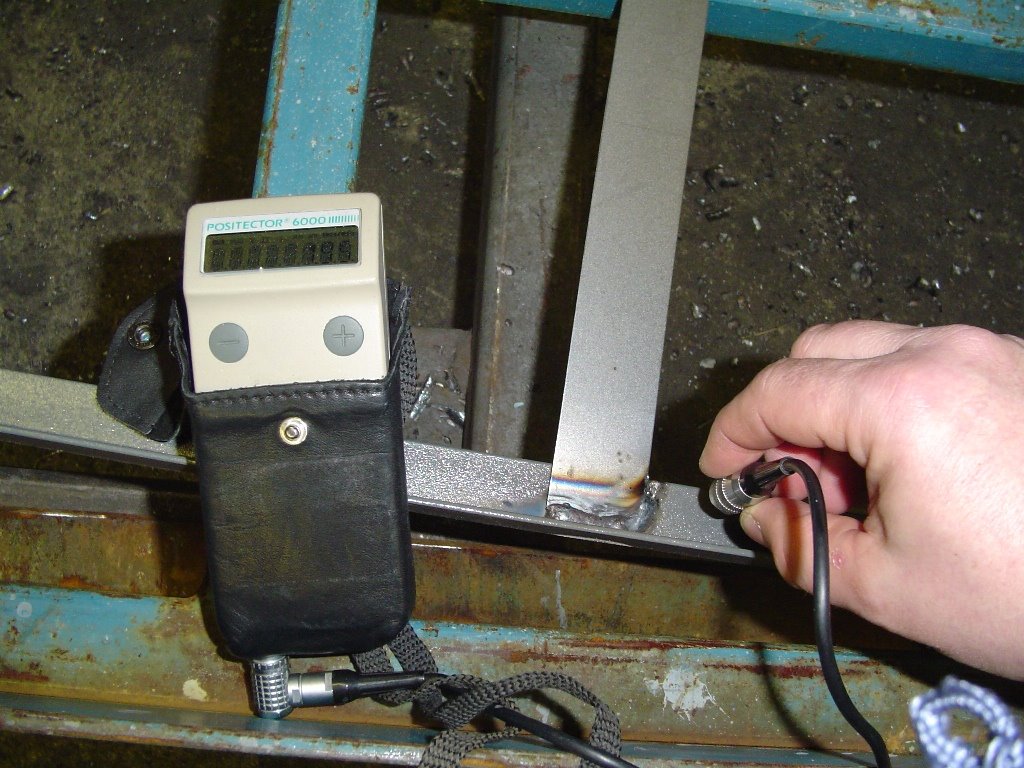
A recent quality issue occurred with one of our suppliers of pre-coated steel. This steel material has a designated specification for paint thickness with a typical +/- allowable tolerance. In our application, the coating needed to be just thick enough to deter rust yet thin enough to allow proper welding.
On a recent shipment, our welders were having a difficult time welding the steel. With our positector, a devise used to measure coating thickness, we quickly measured several samples and found that the coating thickness was all over the map. In some cases, the measured thickness was well over the tolerance range by 3 times the specification causing the welding problem.
We contacted our supplier on this problem. In response, our supplier provided their quality check data from this lot showing everything measuring within tolerance. They suggested that we change the specification if this was not working for us. Our supplier believed that their process was in control even though what we measured on the actual parts did not match their data. To help our supplier in their investigation, we returned several pieces of the nonconforming material.
A few days later, our supplier humbly apologized for the inconvenience caused by these nonconforming parts that were clearly out of spec. When they dug a little deeper in their investigation, they discovered that the quality check procedures were not being followed. The first shift operation was only making 2 checks instead of 10 checks while the second and third shifts were not doing any of the 10 quality checks. All the shifts just filled out the quality check sheet with random numbers to show that 10 checks were completed and within acceptable limits. When management reviewed the reports, everything looked good.
Our supplier assures us that the supervisor has been informed of the problem and that the quality checks are now being performed according to the proper procedures. To their credit, the next shipment was acceptable.
With clearly defined procedures in place, we assume people are doing their quality checks, but are they??? Maybe not! Worse yet, do you find out on your own or when your customer complains?
As a lean thinker, would you accept this suppliers corrective action? How confident would you be that these parts will remain within acceptable tolerance? What course of action would you take if you were this supplier?
Using lean manufacturing principles as our guide, here are several suggestions that may improve our suppliers quality checks.
#1 VERIFY, VERIFY and VERIFY
The first course of action is to verify that the quality checks are being correctly conducted. Regular process audits and a solid verification process will provide the frame work of monitoring your "real" process output.
#2 Genchi Genbutsu
Follow the principle of genchi genbutsu which means "going to the place to see the actual situation for understanding". Management should not rely on reports to understand the process or determine how things are running in their operation. Go out to the shop floor and see for yourself.
#3 Poka-Yoke
Quality checks are fine however preventing the problems in the first place is a better course of action. Put poka-yoke or mistake proofing devices into place. Yes, the more poka-yoke devices the better. Make the process error proof and put countermeasures in place to improve the process.
#4 Keep it Simple
Increasing inspection and adding complex quality procedures will not solve the problem. Why did the employees not follow the original quality plan of 10 quality checks? Ask the 5 whys to get at the root cause. Maybe the quality check process was too complex. Work with the operators to develop a simple, easy quality check plan.
Wednesday, March 22, 2006
Six Sigma Opportunity for Lost Baggage
In yesterday's issue of USA Today, there was an interesting article by Dan Reed on Airlines losing a record number of bags last year. As a air traveler for many years, I have experienced the pain of losing my bags after a flight. It is not a pleasant customer experience. After quickly reading the article, I thought that of all problems that could be considered for a Six Sigma project, this would be one wickedly cool project!
Based on the numbers contained in the article, a major quality improvement by any airline in their lost bags metric would greatly improve customer satisfaction and boost the bottom line. What was the cost of this poor quality performance? The article estimated the cost to the airlines for loss bags to be $2.5 billion. With the current financial situation of the airlines, this would be a huge improvement opportunity.
According to the article, 30 million bags were lost out of 3.7 billion bags checked in last year. With less than 1% error rate, it was stated this 99% success rate would be considered good in many industries but basically is unacceptable for the airlines. OUTSTANDING quality viewpoint! Do not accept the 99% success rate as good enough.
Using these numbers, the airline lost baggage rate is 8,108 Parts Per Million opportunities defective(PPM rate). In the six sigma world, that would be under a 4 sigma performance level. Remember a six sigma level would be only 3.4 parts per million (PPM) defective.
Without many of the details, it would be difficult to analysis the problem. However, the article did help point out some focus areas. With about 61% mishandled bags occurring on baggage transferred from one flight to another (versus direct flights), I would obviously focus investigative efforts on this process. In addition, 15% of the errors were due to the airlines failing to load them on the proper fights. Sounds like there is some level of data to start a formalized problem solving investigation.
By asking the 5 why's, along with Pareto charts and cause/effect analysis, the airlines could begin to see the root causes for lost bags and start countermeasures to poka-yoke (mistake-proof) the process. With all due respect to the airlines, this improvement process sounds easy, when in fact, it is difficult to isolate these common cause variations and prevent them from occurring. Difficult but certainly not impossible!
My advice to the airlines, don't focus on layoffs and pay cuts that further erode your employee relations. That short term thinking to cut costs will not build your team that you need to be more competitive for the future. The negative price you pay is too high. Instead, work together with your employees and try a focused six sigma program. As a team, go after the $2.5 billion along with other process improvements. You need the money, but more importantly, a large number customers will be transformed into extremely happy passengers!
Based on the numbers contained in the article, a major quality improvement by any airline in their lost bags metric would greatly improve customer satisfaction and boost the bottom line. What was the cost of this poor quality performance? The article estimated the cost to the airlines for loss bags to be $2.5 billion. With the current financial situation of the airlines, this would be a huge improvement opportunity.
According to the article, 30 million bags were lost out of 3.7 billion bags checked in last year. With less than 1% error rate, it was stated this 99% success rate would be considered good in many industries but basically is unacceptable for the airlines. OUTSTANDING quality viewpoint! Do not accept the 99% success rate as good enough.
Using these numbers, the airline lost baggage rate is 8,108 Parts Per Million opportunities defective(PPM rate). In the six sigma world, that would be under a 4 sigma performance level. Remember a six sigma level would be only 3.4 parts per million (PPM) defective.
Without many of the details, it would be difficult to analysis the problem. However, the article did help point out some focus areas. With about 61% mishandled bags occurring on baggage transferred from one flight to another (versus direct flights), I would obviously focus investigative efforts on this process. In addition, 15% of the errors were due to the airlines failing to load them on the proper fights. Sounds like there is some level of data to start a formalized problem solving investigation.
By asking the 5 why's, along with Pareto charts and cause/effect analysis, the airlines could begin to see the root causes for lost bags and start countermeasures to poka-yoke (mistake-proof) the process. With all due respect to the airlines, this improvement process sounds easy, when in fact, it is difficult to isolate these common cause variations and prevent them from occurring. Difficult but certainly not impossible!
My advice to the airlines, don't focus on layoffs and pay cuts that further erode your employee relations. That short term thinking to cut costs will not build your team that you need to be more competitive for the future. The negative price you pay is too high. Instead, work together with your employees and try a focused six sigma program. As a team, go after the $2.5 billion along with other process improvements. You need the money, but more importantly, a large number customers will be transformed into extremely happy passengers!
Friday, March 17, 2006
Kaizen Priorities Part 2
My post on Kaizen Priorities caught the attention of Bill Waddell over at Evolving Excellence blog that inspired him to write Lean Manufacturing providing his opposing view on this topic. In my opinion, Bill has excellent viewpoints on lean and provides passionate insights to lean manufacturing. However, I think just a little bit differently than Bill on this topic.
First, the points that I am promoting in Kaizen Priorities are simply to 1) avoid debates and arguments about lean like this one and just start improving, and 2) there are some weaknesses held against the lean approach and that targeted kaizen may yield visible results faster. I guess I failed on both points. The post did not in any way, shape or form pretend to describe the entire scope and the core essence of kaizen or the Toyota Production System. One short post could possibly do it.
Second, I am positive that we can all agree that any improvement in business is good. According to the Japanese business philosophy as described by Massaki Imai, "Whenever and wherever improvements are made in business, these improvements are eventually going to lead to improvements in areas such as quality and productivity."
So how can any suggestions for improvement be "wrong"?
As far as I know, it is correct to state that Taiichi Ohno and Shigeo Shingo did not directly promote looking at bottlenecks. It is well documented, Taiichi Ohno believed strongly that the starting point of kaizen is being aware or recognizing a problem first. See the need, then start at the problem. His definition of a problem took the form of a burden to people or inconvenience downstream to other employees or customers.
This point leads to the concept of kaizen. I was taught kaizen is more than just continuous improvement of a process or cycle time focused, it is about people. The meaning of kaizen includes the development, training and improvement of people along with removing the burdens that people deal with in work. This higher principle of kaizen is found in my suggestions to look at removing bottlenecks and improving the hardest job in the organization.
Shigeo Shingo stated, "There are four purposes of improvement: easier, better, faster and cheaper. These four goals appear in the order of priority." This viewpoint, again, starts with people. According to Bill's post, we must concentrate on compressing cycle time. This approach just focuses on "faster" and ignores "easier, better and cheaper." All my kaizen suggestions are aimed at easier, better and faster thinking cheaper will follow.
Finally, the disagreement with my suggested kaizen priorities could be just the differences between Japanese management and American management approaches. The Japanese management approach is geared towards long term thinking and process orientation whereas the American management approach is bias towards short term thinking and results orientation. Look at promotions, hiring and firing in America, it is all results based. Just look at nearly every management performance review in America, it's results that matter most( not attitude, effort, techniques or methods). We measure companies on the bottom line, we measure coaches on win-loss records and we measure people on getting the job done with results.
My kaizen priorities are an attempt to go from a process orientation versus results orientation conflict into believing both are equally important, its process orientation and results orientation. Just like the quality and cost goals should be equally important and not one versus the other. With this viewpoint, I attempted to stay true to the meaning of kaizen by removing burdens to people (bottlenecks, tough jobs, etc) while achieving visible results.
Repeating the words of Massaki Imai, "Whenever and wherever improvements are made in business, these improvements are eventually going to lead to improvements in areas such as quality and productivity." As I see it, the biggest problem that American management has with this is the "eventually" part.
First, the points that I am promoting in Kaizen Priorities are simply to 1) avoid debates and arguments about lean like this one and just start improving, and 2) there are some weaknesses held against the lean approach and that targeted kaizen may yield visible results faster. I guess I failed on both points. The post did not in any way, shape or form pretend to describe the entire scope and the core essence of kaizen or the Toyota Production System. One short post could possibly do it.
Second, I am positive that we can all agree that any improvement in business is good. According to the Japanese business philosophy as described by Massaki Imai, "Whenever and wherever improvements are made in business, these improvements are eventually going to lead to improvements in areas such as quality and productivity."
So how can any suggestions for improvement be "wrong"?
As far as I know, it is correct to state that Taiichi Ohno and Shigeo Shingo did not directly promote looking at bottlenecks. It is well documented, Taiichi Ohno believed strongly that the starting point of kaizen is being aware or recognizing a problem first. See the need, then start at the problem. His definition of a problem took the form of a burden to people or inconvenience downstream to other employees or customers.
This point leads to the concept of kaizen. I was taught kaizen is more than just continuous improvement of a process or cycle time focused, it is about people. The meaning of kaizen includes the development, training and improvement of people along with removing the burdens that people deal with in work. This higher principle of kaizen is found in my suggestions to look at removing bottlenecks and improving the hardest job in the organization.
Shigeo Shingo stated, "There are four purposes of improvement: easier, better, faster and cheaper. These four goals appear in the order of priority." This viewpoint, again, starts with people. According to Bill's post, we must concentrate on compressing cycle time. This approach just focuses on "faster" and ignores "easier, better and cheaper." All my kaizen suggestions are aimed at easier, better and faster thinking cheaper will follow.
Finally, the disagreement with my suggested kaizen priorities could be just the differences between Japanese management and American management approaches. The Japanese management approach is geared towards long term thinking and process orientation whereas the American management approach is bias towards short term thinking and results orientation. Look at promotions, hiring and firing in America, it is all results based. Just look at nearly every management performance review in America, it's results that matter most( not attitude, effort, techniques or methods). We measure companies on the bottom line, we measure coaches on win-loss records and we measure people on getting the job done with results.
My kaizen priorities are an attempt to go from a process orientation versus results orientation conflict into believing both are equally important, its process orientation and results orientation. Just like the quality and cost goals should be equally important and not one versus the other. With this viewpoint, I attempted to stay true to the meaning of kaizen by removing burdens to people (bottlenecks, tough jobs, etc) while achieving visible results.
Repeating the words of Massaki Imai, "Whenever and wherever improvements are made in business, these improvements are eventually going to lead to improvements in areas such as quality and productivity." As I see it, the biggest problem that American management has with this is the "eventually" part.
Wednesday, March 15, 2006
Kaizen Priorities
One of the negative comments I hear about the lean approach is that it is unfocused or a shotgun approach that does not have an impact to the bottom line. Some will even argue that a Six Sigma approach is better because it focuses on high impact projects but takes too long to show results. Before long, a hybrid version called Lean Six Sigma is promoted as the best of both worlds. In my experience, if we spent all this energy in these debates towards any improvement actions at gemba, you would be miles ahead on your lean journey.
I will not perpetuate this debate here because that would be muda. However, I would like to help some of the lean leaders defend against the unfocused or shotgun approach attacks. To be fair, many companies that are just starting their lean journey have so many opportunities for improvement (visible evidence of the 7 wastes everywhere you turn) that we call these places "target rich environments". It's easy to just jump in and start making improvements without setting a priorities.
But before you jump, here are a few simple kaizen priorities that might make a difference for a bottom line impact.
Priority 1 Kaizen your bottleneck station first
If you don't know what is your bottleneck station, find it. There are many ways to find your bottleneck: all the inventory is piled in front of it, people downstream are waiting on it, it has the most overtime, it's a top maintenance priority, etc. By improving this station first, your value stream/throughput is immediately improved. Both the customer and bottom line are positively impacted.
Priority 2 Kaizen the newest bottleneck station next
The effects are the same as above. You should continue this cycle of improving your bottleneck station every time it is shifted by improvements to the previous bottleneck station.
Priority 3 Kaizen the hardest job in your operation
Like your bottleneck station, you should locate the hardest job in your operation. To find it, just check for some tell tale signs: the lowest seniority people are usually on it, this job has the highest turnover, this job has the most absenteeism, most employees' complaints can come from this job, the job may even be so tough that shop floor myths and legends surround it. If you still cannot find it, just ask each of your employees. A kaizen at this job will improve employee morale, improve quality at this station and also make a visible, bottom line improvement. Your goal is to make this job easy.
Priority 4 Kaizen the easiest job in your operation
At first, this may seem counter intuitive to priority 3. But take a closer look at your easiest job. This job is a candidate for combination with other tasks within the value stream. Everybody considers it the job to have or the highest seniority people flock to it. Your goal is to eliminate it as a stand alone task.
Priority 5 Kaizen your top seller
The 80/20 rule applies here. Go for for top seller, biggest service, your bread and butter product, the thing that makes your company stand out. By improving this top seller, you make a distinctive and highly visible impact. Your customer will benefit and your competitors will be running to catch up. One caution: This will make many people in your company extremely uncomfortable and they may have a strong desire not to mess with a winner. It might take some persuading to get support on this priority. But even Toyota improves the Camry!
I will not perpetuate this debate here because that would be muda. However, I would like to help some of the lean leaders defend against the unfocused or shotgun approach attacks. To be fair, many companies that are just starting their lean journey have so many opportunities for improvement (visible evidence of the 7 wastes everywhere you turn) that we call these places "target rich environments". It's easy to just jump in and start making improvements without setting a priorities.
But before you jump, here are a few simple kaizen priorities that might make a difference for a bottom line impact.
Priority 1 Kaizen your bottleneck station first
If you don't know what is your bottleneck station, find it. There are many ways to find your bottleneck: all the inventory is piled in front of it, people downstream are waiting on it, it has the most overtime, it's a top maintenance priority, etc. By improving this station first, your value stream/throughput is immediately improved. Both the customer and bottom line are positively impacted.
Priority 2 Kaizen the newest bottleneck station next
The effects are the same as above. You should continue this cycle of improving your bottleneck station every time it is shifted by improvements to the previous bottleneck station.
Priority 3 Kaizen the hardest job in your operation
Like your bottleneck station, you should locate the hardest job in your operation. To find it, just check for some tell tale signs: the lowest seniority people are usually on it, this job has the highest turnover, this job has the most absenteeism, most employees' complaints can come from this job, the job may even be so tough that shop floor myths and legends surround it. If you still cannot find it, just ask each of your employees. A kaizen at this job will improve employee morale, improve quality at this station and also make a visible, bottom line improvement. Your goal is to make this job easy.
Priority 4 Kaizen the easiest job in your operation
At first, this may seem counter intuitive to priority 3. But take a closer look at your easiest job. This job is a candidate for combination with other tasks within the value stream. Everybody considers it the job to have or the highest seniority people flock to it. Your goal is to eliminate it as a stand alone task.
Priority 5 Kaizen your top seller
The 80/20 rule applies here. Go for for top seller, biggest service, your bread and butter product, the thing that makes your company stand out. By improving this top seller, you make a distinctive and highly visible impact. Your customer will benefit and your competitors will be running to catch up. One caution: This will make many people in your company extremely uncomfortable and they may have a strong desire not to mess with a winner. It might take some persuading to get support on this priority. But even Toyota improves the Camry!
Thursday, March 09, 2006
Easy Lean
The lean journey is a long, continuous process of learning, experimentation and improvement. So when I received an email today about some lean webinars, I took a quick look over the topics. Normally, I do not have a lot of spare time for webinars, but I will make the time if I find something of lean value. The one topic that caught my attention was about "Easy Lean."
Now, I did not take a closer look at "Easy Lean" because I was looking for a shortcut (There are NO shortcuts on the lean journey). I took a closer look to see how someone could possibly sell something called "Easy Lean."
As it turned out, the company selling "Easy Lean" is a software company. They promote "Easy Lean" as some proprietary, lean transformation, turn-key system. But wait, there's more. Not only do you get lean in 45 days or less, they have an "electronic pull system" to get even leaner.
Most of you are smart enough not to buy into this branding of lean. However, there are some short-sighted executives that might fall for this slick shortcut to "Easy Lean." That would be a shame. For those with limited lean enlightenment, I will provide a few short rules to get past the branding of "Easy Lean."
Rule #1 Lean is not easy.
It take persistence and hard work to follow the lean journey. The path is never ending with constant improvement. There are no shortcuts. Even Toyota with 50 years of lean experience is still working on it.
Rule #2 There are NO software solutions in lean.
Lean is about finding and eliminating waste in the process using teamwork, focus and creativity. There are no software packages anywhere that magically make your company lean.
Rule #3 Always Simplify first, Automate last (and automate only if needed).
Never seek to automate your complex processes or system. These attempts will result in failure. Any software packaged to automate a complex system will be custom made, expensive and complex on its own rights. Just work on making it simple.
Rule #4 If it sounds too good to be true, it is!
This rule is as simple as it gets and needs no explanation.
Despite these few basic rules to dispel the path of "Easy Lean." Some management will believe that they have found the right path. I guess these would be the same people that buy into the "Easy Diet" and "Easy Money" programs, too.
Now, I did not take a closer look at "Easy Lean" because I was looking for a shortcut (There are NO shortcuts on the lean journey). I took a closer look to see how someone could possibly sell something called "Easy Lean."
As it turned out, the company selling "Easy Lean" is a software company. They promote "Easy Lean" as some proprietary, lean transformation, turn-key system. But wait, there's more. Not only do you get lean in 45 days or less, they have an "electronic pull system" to get even leaner.
Most of you are smart enough not to buy into this branding of lean. However, there are some short-sighted executives that might fall for this slick shortcut to "Easy Lean." That would be a shame. For those with limited lean enlightenment, I will provide a few short rules to get past the branding of "Easy Lean."
Rule #1 Lean is not easy.
It take persistence and hard work to follow the lean journey. The path is never ending with constant improvement. There are no shortcuts. Even Toyota with 50 years of lean experience is still working on it.
Rule #2 There are NO software solutions in lean.
Lean is about finding and eliminating waste in the process using teamwork, focus and creativity. There are no software packages anywhere that magically make your company lean.
Rule #3 Always Simplify first, Automate last (and automate only if needed).
Never seek to automate your complex processes or system. These attempts will result in failure. Any software packaged to automate a complex system will be custom made, expensive and complex on its own rights. Just work on making it simple.
Rule #4 If it sounds too good to be true, it is!
This rule is as simple as it gets and needs no explanation.
Despite these few basic rules to dispel the path of "Easy Lean." Some management will believe that they have found the right path. I guess these would be the same people that buy into the "Easy Diet" and "Easy Money" programs, too.
Tuesday, March 07, 2006
Best Lean Tool to Guide your Lean Journey
There are many helpful and simple lean tools to use on your lean journey however one tool stands out above all others. The basic stopwatch has proven itself to be the best lean tool available. Like a compass to a hiker, a stopwatch is to the lean practitioner.
The focus of lean manufacturing is to eliminate waste in your process and improve your value stream. The measurement of your success is found in your process timeline which is best measured with a stopwatch. Some might argue that a calendar is a better tool with some processes but I will save that point for another day.
What other tool is the best decision maker of a lean improvement where time is the key determining factor? A stopwatch is unbiased and simply tells you how much time an activity takes without playing favorites. In the past, I have found instances where people would spend hours arguing the merits of one method over another method. In most cases, either no decision could be agreed upon or one party gives up in frustration. A better approach is to put aside the power plays and let the stopwatch determine the best method. Instead of wasting time debating who's ideas is better, go to gemba and try both methods while the stopwatch measures the results. Let the stopwatch lead your way.
Helpful lean hint: Try to get in the habit of measuring time in seconds. If you use minutes or hours, people tend to think in those larger terms and believe 1 hour is quick. If you use seconds, it places emphasis on your lean journey that every second counts.
Subscribe to:
Posts (Atom)